Muffler packing batt, mat, blanket, sheet, pad, wadding and wool are overlapping market terms, but they do not always describe the same construction. One supplier may call a flat fiberglass piece a packing mat, another may call it exhaust wadding, and an industrial buyer may describe a thicker fibrous layer as a batt or blanket. For OEM purchasing, the product name should be by measurable specifications rather than used as the complete material definition.
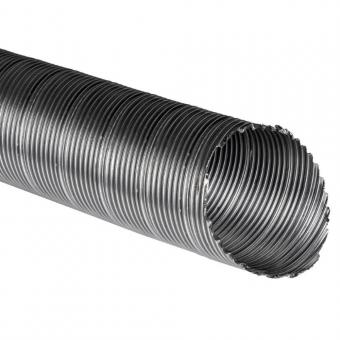
This guide concerns internal acoustic packing installed inside an absorptive muffler or exhaust silencer. It does not concern a removable thermal insulation blanket fitted around the outside of a muffler, exhaust pipe or industrial silencer.
BSTFLEX supplies fiberglass, ceramic fiber, basalt fiber, stainless steel wool and fabricated packing components through the Muffler Packing product range. The sections below explain how to translate broad terms such as batt, blanket, wool and wadding into a repeatable drawing, RFQ and incoming-inspection requirement.
Quick Answer: Batt, Mat, Blanket, Sheet or Wadding?
Use the term that matches the market and purchasing context, but control the product with technical values.
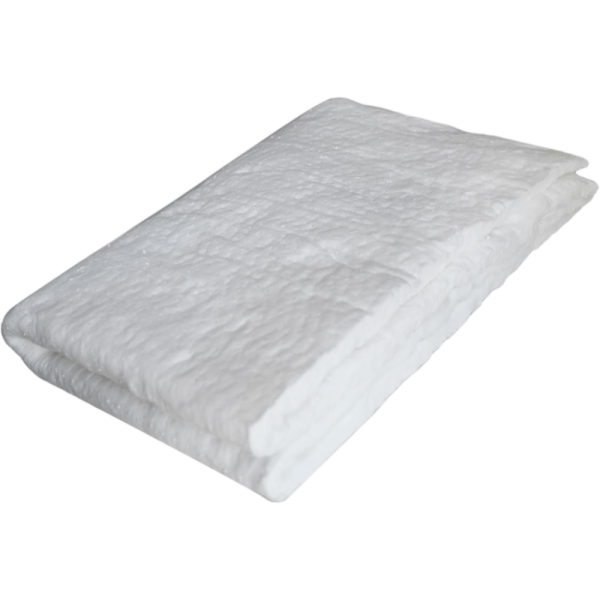
- Mat usually describes a flat fibrous product with defined thickness, area and material weight.
- Sheet emphasizes the cut or roll format rather than a specific fiber-forming process.
- Batt or batting generally describes a thicker, lofty fibrous layer supplied as a flexible piece or roll.
- Blanket may describe an internal fibrous sheet, but it can also mean an external thermal insulation cover; location must be stated.
- Wadding is a common market term for fibrous silencer filling, especially in repair and powersports applications.
- Wool is a broad description used for fiberglass, ceramic fiber, basalt fiber and stainless steel wool.
- Pad normally means a pre-cut or shaped piece prepared for a defined packing position.
None of these words independently establishes fiber grade, density, areal weight, temperature capability or installed performance.
Internal Muffler Packing vs External Insulation Blanket
The word blanket causes the greatest risk of category confusion.
| Product Direction | Installed Location | Primary Function | Typical Specification Fields |
|---|---|---|---|
| Internal muffler packing blanket or batt | Inside an absorptive muffler, around a perforated core or behind a perforated facing | Provides porous acoustic filling within the approved silencer design | Fiber grade, areal weight, thickness, dry charge, cut dimensions and retention |
| External muffler insulation blanket | Around the outside of the muffler or silencer shell | Controls external heat transfer and surface temperature | Outer dimensions, insulation thickness, hot-face fabric, closure and removable-jacket construction |
A request for muffler packing blanket should therefore state “internal acoustic packing” when that is the intended product. A request for an external thermal cover belongs to a different product family.
Why the Same Product Has Several Names
Terminology changes by country, industry and supply channel.
Examples include:
- muffler packing mat;
- exhaust packing sheet;
- silencer wadding;
- muffler packing wool;
- exhaust packing blanket;
- muffler packing batt;
- silencer insulation wool;
- muffler packing pad;
- exhaust acoustic filling;
- exhaust damping material.
These expressions can point to the same general purchasing need, but they can also describe different products. The buyer should always ask what the supplied component physically is and what preparation remains at the assembly station.
Supply-Form Comparison
| Supply Form | Typical Physical Description | Main OEM Controls | Work Remaining at Customer |
|---|---|---|---|
| Muffler packing mat | Flat fibrous layer supplied as sheet, roll or cut piece | Material, thickness, areal weight, width, length and piece weight | Cutting where required, wrapping, overlap and installation |
| Packing batt or batting | Lofty, flexible fibrous layer, often thicker and less rigid than a dense mat | Fiber identity, relaxed thickness, weight per area or piece and compression condition | Shaping, wrapping and controlled compression |
| Packing blanket | Broad term for a flexible internal fibrous layer or roll | Confirm internal use, material, construction, weight and dimensions | Cutting and installation according to the silencer drawing |
| Packing sheet | Flat supplied format; may be conventional, stitched or heat-released | Areal weight, cut dimensions, construction and any release mechanism | Wrapping or positioning |
| Packing pad | Pre-cut rectangular or shaped material piece | Part drawing, finished size, piece weight and material reference | Final placement or forming |
| Wadding or wool | General fibrous filling term; can be loose or formed | Exact fiber, supplied form, dry charge and installation method | Depends on whether supplied loose, rolled, cut or contained |
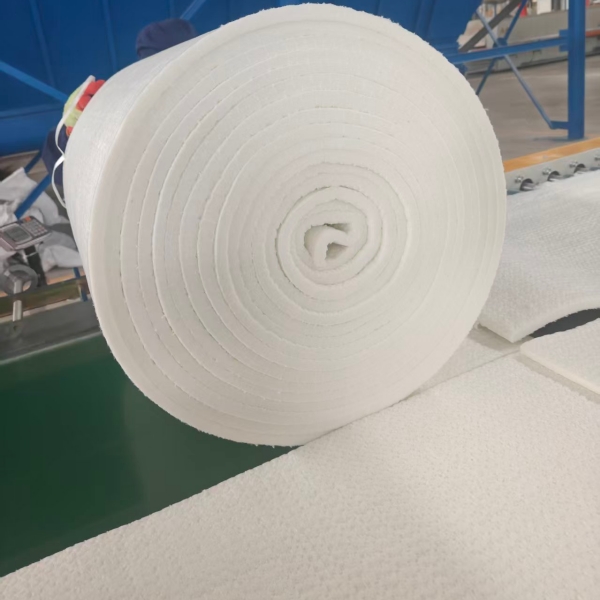
| Roll or reel | Continuous material for in-house converting | Usable width, length or mass, linear/areal weight, core size and splices | Cutting, weighing, identification and scrap control |
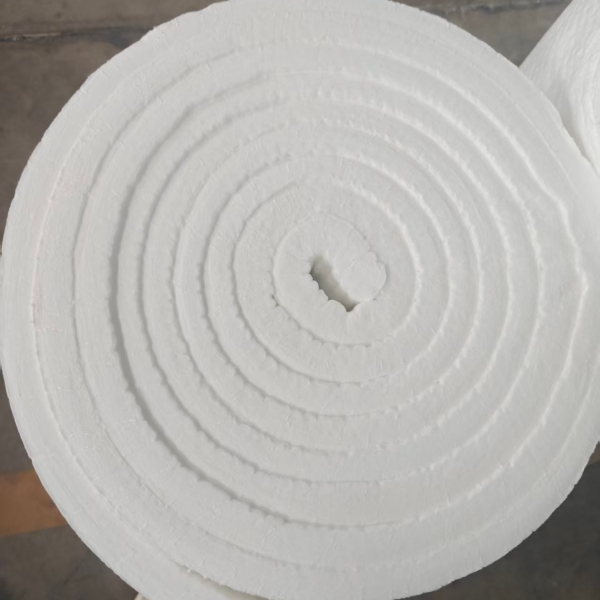
Fiberglass Muffler Packing Mat and Batt
Fiberglass is widely used in absorptive exhaust silencers, but the term fiberglass alone does not define whether the product is yarn, loose fiber, a needled mat, a stitched sheet or a contained component.
For flat fiberglass forms, BSTFLEX provides the Fiberglass Exhaust Silencer Packing product direction. A fiberglass mat or batt RFQ should identify:
- glass grade;
- fiber construction;
- nominal thickness;
- thickness measurement condition;
- fiber-only areal weight;
- complete sheet weight where relevant;
- roll or cut-piece dimensions;
- dry filling weight per silencer;
- any binder, stitching or support layer;
- operating conditions and retention method.
For yarn-based and continuous-fiber directions, review Fiberglass Exhaust Muffler Packing and E-glass Exhaust Silencer Packing.
Fiberglass Mat vs Fiberglass Batting
The words mat and batting are sometimes used interchangeably in sales listings, but purchasing should not assume identical construction.
A mat may be relatively uniform and supplied to a controlled areal weight. Batting may emphasize loft and flexibility. The actual product can still vary by:
- fiber length;
- continuous or discontinuous construction;
- needling;
- binder content;
- stitching;
- density;
- compression;
- surface treatment.
Where the factory needs repeatable cut pieces, piece weight and areal weight are often more useful than the word batt or mat.
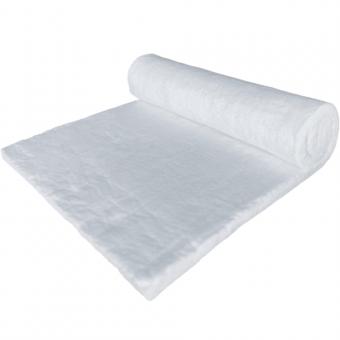
Ceramic Fiber Packing Blanket, Batt or Mat
Ceramic fiber is frequently sold in blanket, batt and mat forms. In a muffler application, the buyer should make clear that the product is intended as internal acoustic packing rather than external furnace or pipe insulation.
BSTFLEX supplies a Ceramic Fiber Muffler Packing Mat for high-temperature silencer projects.
A ceramic fiber RFQ should define:
- actual fiber family and grade;
- blanket, batt, mat or cut-piece form;
- thickness;
- mass per unit area or bulk density;
- cut dimensions;
- binder or support layers, if any;
- handling and safety documentation;
- continuous and peak operating conditions;
- dry material quantity per silencer.
Do not assume that every ceramic fiber blanket is suitable for an exhaust muffler. The material and complete assembly require application-specific approval.
Basalt Packing Mat, Sheet and Batt
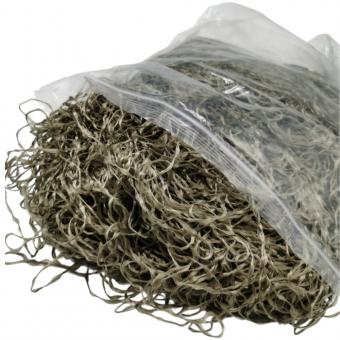
Basalt fiber can be supplied as loose material, a conventional mat or a heat-released expanding sheet.
BSTFLEX product directions include:
- Basalt Fiber Loose Fill Muffler Packing;
- Basalt Muffler Packing Mat;
- Basalt Fiber Expanding Muffler Packing Sheet.
A conventional basalt mat should not be described as self-expanding unless it includes a verified heat-release construction. Likewise, basalt loose fill should not be described as a sheet or batt simply because it can be compressed into a package.
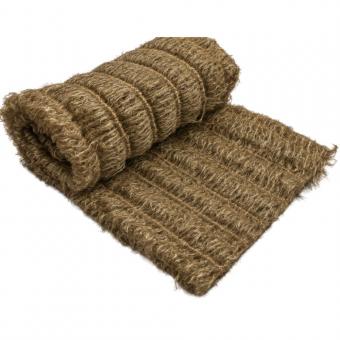
Stainless Steel Wool Blanket, Pad and Roll
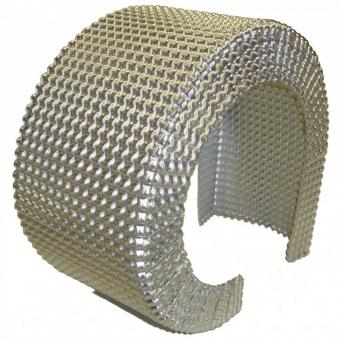
Stainless steel wool can be supplied as bulk fiber, a roll, a pre-cut pad, a blanket-like layer or a formed core sleeve.
BSTFLEX supplies:
- Stainless Steel Wool Exhaust Muffler Packing;
- Stainless Steel Wool Reels and Converted Pieces;
- Steel Wool Muffler Core Sleeves.
For stainless wool pads or blanket rolls, specify:
- alloy;
- fiber grade;
- width and length;
- mass per unit length or area;
- piece weight;
- installed thickness;
- layer count;
- overlap;
- supporting wire cloth or mesh.
Stainless wool should not automatically be counted as the entire acoustic filling. In many layered designs it protects a larger fiberglass or basalt packing charge near the perforated core.
Mat, Sheet and Blanket Are Not Material Grades
Supply form and material grade belong in separate fields.
Examples of complete descriptions include:
- E-glass fiberglass muffler packing mat;
- ceramic fiber silencer packing blanket;
- basalt fiber exhaust packing sheet;
- stainless steel wool muffler packing pad;
- texturized fiberglass expanding packing sheet.
Descriptions such as “high-temperature blanket” or “muffler wool” are not sufficient for repeat OEM purchasing.
Thickness, Areal Weight and Installed Density
These three values describe different properties.
| Measurement | Meaning | Common Error |
|---|---|---|
| Thickness | Depth of the supplied material under a defined measurement condition | Assuming equal thickness means equal fiber quantity |
| Areal weight | Mass per unit area, commonly g/m2 | Confusing complete-sheet weight with fiber-only weight |
| Installed density | Dry acoustic-fiber mass divided by the net cavity volume | Using shipping-package density as installed density |
A fibrous batt or blanket is compressible. State whether thickness is measured relaxed, under a specified load, compressed for shipment or installed in the silencer.
Calculate Cut-Piece Weight
For a rectangular mat, sheet or batt with a confirmed areal weight:
Cut-piece weight = usable width × usable length × areal weight.
When width and length are in meters and areal weight is in g/m2, the result is in grams.
For example only, a piece measuring 0.40 m × 0.60 m at 800 g/m2 has a nominal complete-piece weight of:
0.40 × 0.60 × 800 = 192 g.
This example is not a recommended muffler filling weight. Confirm whether the areal weight represents fiber alone or the complete product including binder, stitching or backing.
Roll Supply vs Pre-Cut Pieces
| Supply Option | Advantages | Customer Controls |
|---|---|---|
| Full roll | Flexible inventory for several part numbers | Cutting, weighing, identification, scrap and process control |
| Standard sheet | Simple purchasing and manageable package size | Final trimming and piece identification |
| Pre-cut rectangular piece | Reduces line-side cutting | Placement, overlap and assembly verification |
| Custom-shaped pad | Better fit for a defined cavity | Orientation and final installation |
| Contained component | Supplier controls fiber charge and containment | Component fit, orientation and silencer closure |
Compare cost per accepted silencer rather than only price per roll, kilogram or square meter.
Cutting Yield and Scrap Control
Purchased area is not the same as usable installed area.
For roll or sheet supply, account for:
- edge trimming;
- orientation restrictions;
- defects or damaged sections;
- setup pieces;
- shaped cutting losses;
- inspection samples;
- offcuts that cannot be reused.
Offcuts should not be added randomly to another muffler to reduce scrap. If small pieces form part of an approved packing layout, they should be identified on the drawing and included in the target material weight.
Seams, Butt Joints and Overlap
Flat packing forms require a defined joining arrangement.
The drawing should identify:
- butt joint or overlap;
- overlap width;
- joint position;
- number of layers;
- whether joints are aligned or staggered;
- permitted temporary restraints;
- final component outside dimensions.
Overlap changes the local material quantity and thickness. Do not leave it to operator preference where repeat production requires a controlled packing charge.
Batt or Blanket for Oval and Irregular Silencers
A flexible batt or blanket can follow a shaped cavity, but it still requires a defined cut pattern and material weight.
For oval, tri-oval, stepped or offset-core silencers, provide:
- internal shell profile;
- perforated core geometry;
- effective packed length;
- narrow and wide cavity dimensions;
- separate packing zones;
- internal brackets and partitions;
- insertion direction.
A correct total weight does not prove that the narrow side, wide pocket and end regions are filled correctly.
Conventional Sheet vs Heat-Released Expanding Sheet
A conventional mat, batt or blanket should not automatically be called self-expanding.
BSTFLEX supplies two heat-released sheet directions:
These products use compressed texturized yarn held by temporary heat-responsive stitching. Their release mechanism, initial-heating procedure and inspection requirements differ from a conventional stable mat or blanket.
When a Pillow, Sock or Preform Is More Appropriate
A flat batt or sheet is not always the most efficient OEM supply form.
BSTFLEX also supplies:
A contained component may be preferable where the factory wants a controlled fiber charge, cleaner handling, part identification and reduced line-side preparation.
Incoming Inspection by Supply Form
| Supply Form | Typical Incoming Checks |
|---|---|
| Roll | Material, width, net mass, areal or linear weight, roll core and lot identification |
| Mat / sheet / blanket | Material, width, length, thickness condition, areal weight and visible construction |
| Batt / batting | Material, relaxed dimensions, piece weight, loft condition and packaging compression |
| Pre-cut pad | Part number, finished dimensions, piece weight, edge condition and quantity |
| Contained component | Fiber-only weight, finished component weight, cover, seam, dimensions and label |
Tolerances, sampling rates and measurement methods should be agreed during sample approval. Nominal catalog values should not be treated as production tolerances unless confirmed.
OEM RFQ Checklist
| RFQ Field | Information to Provide |
|---|---|
| Application | Motorcycle, automotive, truck, generator, industrial, marine or other silencer |
| Internal location | Confirm internal acoustic packing rather than external insulation |
| Material | Fiberglass, ceramic fiber, basalt fiber, stainless steel wool or approved reference |
| Supply form | Batt, mat, blanket, sheet, pad, wadding, wool, roll or contained component |
| Thickness | Nominal value and measurement condition |
| Weight basis | Fiber-only areal weight, complete-sheet areal weight or piece weight |
| Cut dimensions | Width, length, shaped profile and drawing revision |
| Installed quantity | Dry fiber charge or approved density for each packing zone |
| Joint arrangement | Butt joint, overlap, layer count and seam position |
| Operating conditions | Continuous and peak temperature, measurement location, vibration and gas velocity |
| Commercial requirement | Prototype quantity, annual demand, labeling and private packaging |
For drawing- and sample-based projects, review the BSTFLEX OEM Muffler Packing Manufacturing Service.
Frequently Asked Questions
Is a muffler packing batt the same as a muffler packing mat?
Not necessarily. Batt may emphasize a loftier fibrous layer, while mat may describe a more uniform flat material. Confirm the actual fiber construction, thickness, areal weight and supplied condition.
Is muffler packing blanket an internal or external product?
It can be used both ways in market terminology. State “internal acoustic packing blanket” for material installed inside the silencer. An external muffler insulation blanket is a separate thermal-insulation product.
Is silencer wadding the same as fiberglass packing?
Wadding is a broad supply term. It may be fiberglass, basalt, ceramic fiber or another approved material. Confirm the actual fiber and product form.
Can a ceramic fiber blanket be used as muffler packing?
Only when the exact ceramic fiber grade, construction, dimensions, handling requirements and complete-silencer performance have been approved for the application.
Can a mat replace loose fill at the same weight?
Equal weight is one comparison point, but it does not prove equivalent fiber arrangement or distribution. Validate the mat in the actual silencer.
Does a thicker packing blanket absorb more sound?
Thickness alone does not determine acoustic performance. Fiber material, areal weight, installed density, cavity depth, core geometry and complete silencer design also matter.
Can BSTFLEX supply packing batt and blanket in rolls?
BSTFLEX can review roll, sheet, pre-cut and custom-shaped supply for suitable fiberglass, ceramic fiber, basalt and metallic-wool projects. Final availability depends on the selected material and construction.
What should be listed on a packing blanket purchase order?
List the fiber grade, internal packing application, construction, thickness condition, areal weight, width, length, cut pattern, dry charge, operating conditions and packaging requirements.
Request Muffler Packing Batt, Mat, Blanket or Cut Pieces
Send BSTFLEX the silencer cross-section, material requirement, internal packing dimensions, target dry weight and preferred supply form. State clearly whether the inquiry is for an internal acoustic batt or blanket rather than an external insulation cover.
Browse the complete Muffler Packing range for fiberglass, ceramic fiber, basalt fiber, stainless steel wool, expanding sheets and fabricated components.
Request Muffler Packing Batt, Mat or Blanket Samples and an OEM Quote