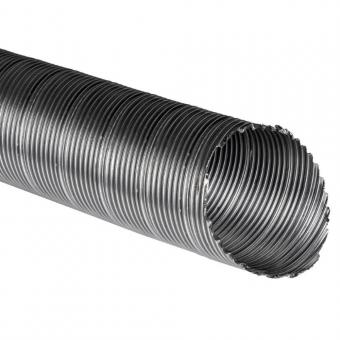
Automotive defroster duct hose carries heated, cooled or fresh air through the under-dash ventilation system toward the windshield demister outlets and cabin vents. When a vehicle is being restored, converted or assembled, a replacement hose has to do more than fit between two openings: it must retain an open air passage after routing and remain connected in the limited space behind the dashboard.
Customers may call the component a defroster hose, car heater duct hose, under-dash heater duct, heater vent hose or flexible automotive HVAC duct. The names overlap, but the correct purchase specification still depends on the air path, the mating connectors, the environment and the required wall construction.
This guide focuses on automotive cabin air distribution. It does not use the terms heat riser hose, diesel heater exhaust pipe and defroster duct interchangeably.
Where Does a Defroster Duct Hose Fit in a Vehicle?
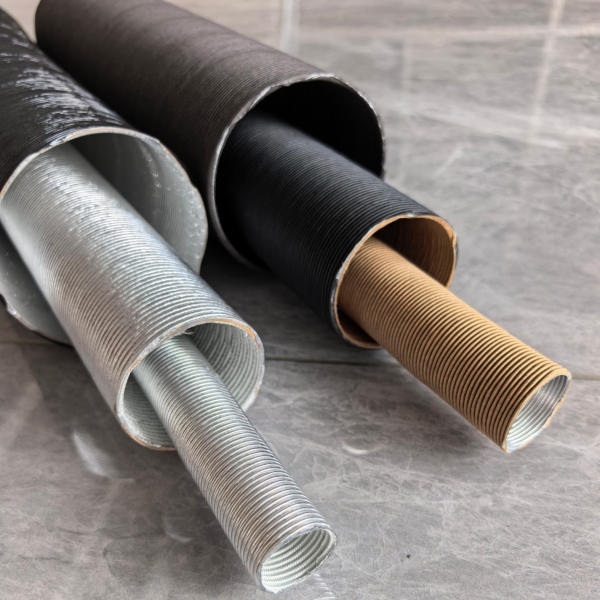
In a typical forced-air heating and ventilation system, air moves through the heater or HVAC housing and is directed by doors and passages toward the windshield, side-window demisters, footwell outlets or cabin registers. Depending on the design, a flexible duct joins two rigid sections or connects an air-distribution housing to a vent.
A worn or flattened hose can affect air delivery at its destination. However, weak windshield defrosting can also result from a blocked intake, a failed mode door, a blower fault or another HVAC restriction. Check the complete system before attributing a defrost problem to the duct material.
Under-dash replacement
The buyer normally needs a hose that fits the existing vent necks, follows the original route and can be installed without removing more trim than necessary. Connector geometry and final cut length are critical.
OEM cabin ventilation
The buyer needs a documented duct construction, approved drawings, consistent formed geometry and repeatable assembly. Material compliance and production inspection become part of the specification.
Defroster Hose Is Not an Engine Heat Riser Hose
These two products can look similar, particularly in older vehicles. Their air circuits are not the same. A carburetor heat riser hose usually routes warmer intake air from the exhaust manifold heat-stove area toward an air cleaner. A defroster duct distributes ventilation air within the passenger compartment toward a window or cabin outlet.
The distinction matters when selecting the wall. The BSTFLEX PAP Paper Aluminum Air Duct is described for interior vehicle ventilation, including fresh-air supply to heating and air-conditioning systems. That statement should not be read as approval for an exposed engine-bay route, exhaust gas service or outdoor installations.
Know Which Surface Faces the Air
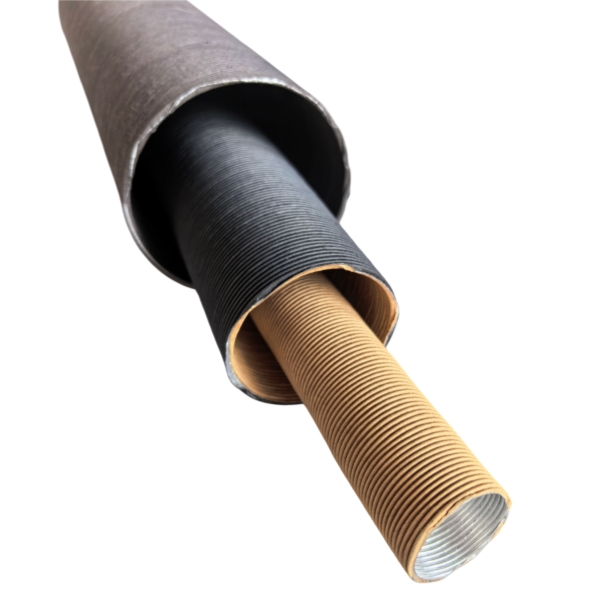
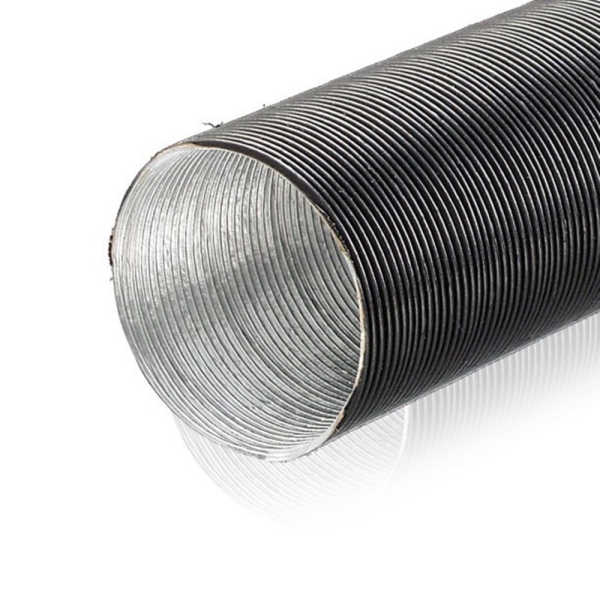
Two relevant BSTFLEX products have different wall sequences. The PAK Flexible Air Duct Hose has kraft paper inside, aluminum foil in the middle and a black PVC film outside. The PAP product has paper on both sides of the aluminum layer. A request for a black duct may therefore indicate a different construction, not simply a different color.
| Construction | Layer sequence, inside to outside | What the buyer should confirm |
|---|---|---|
| PAK | Kraft paper / aluminum foil / black PVC film | Whether the specified interior paper surface and exterior film match the approved HVAC assembly, including temperature and any cabin-material requirements. |
| PAP | Paper / aluminum foil / paper | Whether the original assembly calls for paper on both sides and whether the intended installation remains within the documented interior-use scope. |
| APK | Aluminum / paper / plastic film | Whether an aluminum inner surface is actually required; do not substitute APK for PAK simply because the letters are similar. |
The corresponding APK Hot Air Ducting Pipe is a separate construction. There is no reason to replace one wall sequence with another without reviewing the installation and the customer's material specification.
Measure the Vent Neck Before Selecting the Hose ID
A defroster outlet or HVAC connector often presents an outside spigot onto which the hose fits. Its outside measurement may control the required hose inside diameter. But where a different coupler or insertion arrangement is used, that assumption may not apply. Record how the hose attaches before making the size decision.
- Identify both ends. Measure the blower or distribution-box connection and the destination vent independently. They may not have identical neck sizes.
- Record the connection type. Show whether the duct fits over a spigot, seats into a recess or connects through an adapter.
- Check oval and tapered sections. Note major and minor dimensions and any non-round mating geometry.
- Measure the routed path. Include curves and the length required at both ends for secure engagement; a straight-line distance can be misleading.
- Check surrounding clearance. Confirm the duct will not be crushed by the dashboard, wiring brackets, control cables or a nearby sharp edge.
After fitting a trial piece, confirm that its internal opening remains acceptable at the tightest turn. Do not rely on the nominal hose ID alone to prove the installation will deliver the required airflow.
Why Search Results Show Both Inch and Metric Sizes
Classic-vehicle and aftermarket buyers often search by inch dimensions, such as 1-1/2-inch, 2-inch, 2-1/4-inch or 2-1/2-inch defroster hose. Other buyers use millimeters. These terms are useful for identifying an existing connector or replacement, but they are not a universal size chart for every vehicle or BSTFLEX stock item.
For an OEM inquiry, supply the required actual inside diameter in millimeters, the tolerance, connector details and any original inch designation. If a supplier proposes a nominal equivalent, approve a fitted sample rather than accepting a rounded conversion alone.
Under-Dash Fit Is More Than Diameter
| Installation issue | What to examine | Suggested acceptance evidence |
|---|---|---|
| Hose kinks at a turn | Available radius, wall behavior and the location of rigid brackets | Installed-route photograph and opening inspection at the tightest bend |
| Hose pulls off the vent | Engagement length, end condition and approved retention method | Assembly trial using production-representative fittings |
| Windshield outlet receives little air | Duct shape, joints and the wider HVAC distribution system | Airflow or pressure-loss comparison under an agreed operating condition |
| Hose rubs against adjacent parts | Support positions, movement and contact at the installed route | Clearance assessment and inspection after an agreed durability test |
| Replacement arrives at the wrong length | Relaxed, extended or compressed measurement condition | Approved cut-length drawing and packaging condition |
For a replacement hose, photographs of the old component are helpful, but an original part may have been stretched, cut or deformed during years of service. When possible, compare it with the vehicle's mating fittings and approved assembly drawing.
Use Material Requirements Specific to the Cabin
Vehicle interiors may impose flammability, odor, emissions, heat-aging and other requirements. The correct standard depends on the market and the actual position of the component. Where an automotive flammability requirement such as FMVSS 302 applies, request the relevant evidence for the proposed construction; do not assume that all aluminum-paper or PVC-covered ducts have been tested or approved.
Similarly, do not import a temperature rating from a different heater hose, nor treat an aluminum middle layer as proof that the entire laminate is suitable for a hot surface. The paper, film and any bonding materials must each be considered in the context of the final wall and installation.
Engineering boundary: A flexible defroster duct is an air-routing component. It is not a fuel hose, pressurized coolant hose, brake-line cover or combustion exhaust conduit merely because related materials appear elsewhere in a thermal-protection catalog.
Sample Approval for an OEM Heater Vent Hose
For repeat production, ask for a sample that represents the proposed wall construction and assembly conditions. A practical approval record should cover the following points:
- Material identity: PAK, PAP or another approved construction, with the correct inside-to-outside layer sequence.
- Finished dimensions: ID, outside envelope, length and the agreed dimensional tolerances.
- Cut-end quality: no unacceptable loose material, delamination or sharp projections at the connectors.
- Installed geometry: adequate opening after routing through the dashboard and no interference with nearby components.
- Connection integrity: the approved retention method holds the hose without damaging its wall.
- Air-distribution performance: results of any required flow or pressure-loss testing on the specified assembly.
- Required cabin-material evidence: applicable test documentation for the exact construction, not an unrelated product.
- Supply condition: packed pieces retain the acceptable shape and ends when unpacked and installed.
Agree the test methods and pass criteria before the evaluation. A visually neat hose alone does not prove airflow, durability or compliance.
Two Purchasing Scenarios
Classic-car HVAC restoration
The priority is usually reproducing the fit and routing of a deteriorated defroster hose. Supply the mating connector measurements, under-dash photographs and original wall description. Avoid claiming a universal vehicle fit unless it has been established.
Vehicle or equipment OEM program
The priority is repeatability. Define the construction code, measurement condition, installation route, material evidence, packing method and change-control requirements before approving production supply.
What to Send When Requesting a Quote
Suggested RFQ information: application (windshield defroster, cabin vent or heater outlet); internal diameter and tolerance; connection drawings or photos; overall length and measurement condition; PAK or PAP construction preference; operating temperature range; desired finish; relevant cabin-material requirements; annual quantity; sample quantity; and packing method.
If the original duct is unavailable, supply pictures of both connector necks and the available route. If an alternative layer construction is proposed, identify it as a substitution for engineering review rather than a guaranteed drop-in replacement.
Related BSTFLEX Products
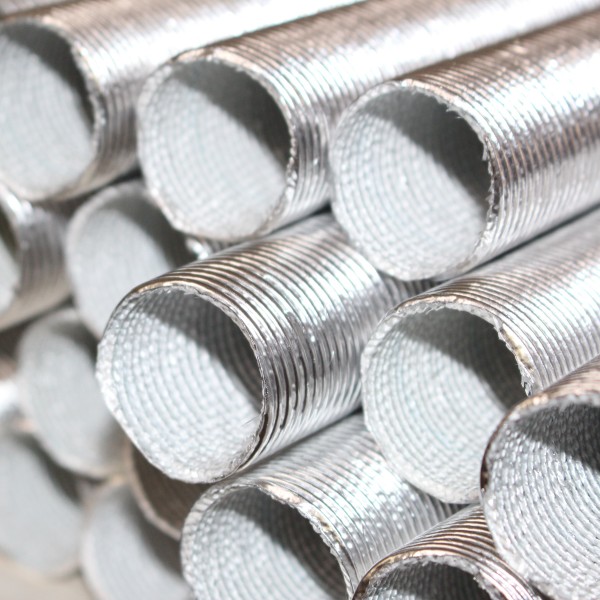
For black plastic-covered, paper-lined composite ducting, review the PAK Flexible Air Duct Hose. For a paper/aluminum/paper construction intended for suitable interior ventilation, review the PAP Paper Aluminum Air Duct. Other forms of ducting and thermal protection are listed under Aluminized Heat Protection Tube and Warm Air Ducting.
Request a Custom Automotive Defroster Duct Hose
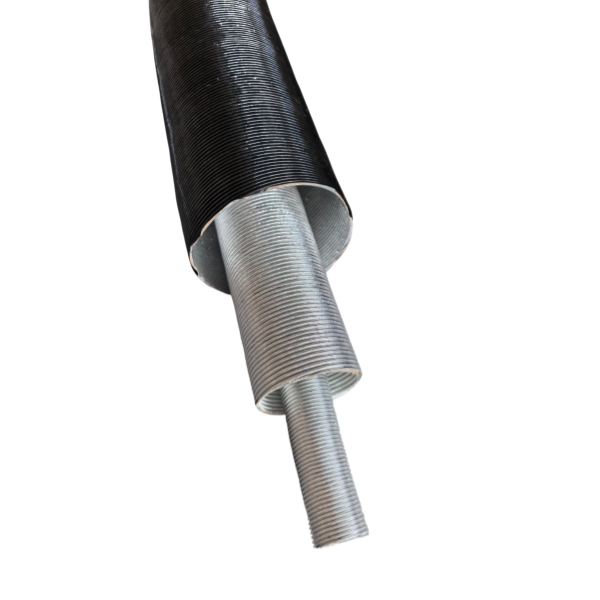
BSTFLEX supports sample- and drawing-based ducting inquiries for automotive air-routing assemblies. Send the connector dimensions, intended cabin location, required wall construction and purchasing quantity. The proposed material and production specification can then be reviewed against your approval requirements.
FAQ: Automotive Defroster and Heater Duct Hose
What is a defroster duct hose?
It is a flexible air passage that routes ventilation or heated air through the vehicle HVAC system toward windshield demister outlets or other cabin vents.
Is a car defroster hose the same as a carburetor heat riser hose?
No. A defroster hose distributes cabin air, typically behind the dashboard. A carburetor heat riser hose routes preheated intake air from an engine heat-stove area toward the air cleaner in applicable older engines.
What is the difference between PAK and PAP ducting?
For the referenced BSTFLEX products, PAK has kraft paper inside, aluminum in the middle and a black PVC-film exterior. PAP has paper inside and outside the aluminum layer. The constructions should not be substituted without application review.
How do I select the right under-dash heater duct diameter?
Measure the mating connector geometry and confirm whether the hose fits over or into the connection. Then inspect the fitted sample along the proposed route, including any oval necks and tight bends.
Are all flexible air ducts approved for vehicle interiors?
No. Material and performance requirements depend on the vehicle, market and installation. Request applicable evidence for the exact duct construction, including any required flammability testing.