other
Automotive Heat Insulation: Practical Guide to Exhaust, Turbo, Catalytic & Intake Heat Shield Jan 27, 2026

Automotive Heat Insulation: Practical Guide to Exhaust, Turbo, Catalytic & Intake Heat Shields

Quick summary: Automotive heat insulation is not just “adding a heatshield.” Reliable thermal control comes from the right material, correct spacing, and installation that survives vibration and thermal cycling. This guide covers exhaust pipe thermal insulation, turbo heat shield, catalytic converter heat shield, intake heat shield, and common car heat shield design mistakes.

Related BSTFLEX Solutions

Exhaust temperature control: Exhaust Insulation Solutions | Hose/wire protection near heat: Fire Sleeve | Local barriers and edge protection: Heat Shield Tape | Technical PDFs: Download Technical Documents


Why automotive heat insulation matters

Modern powertrains pack hot components into tight spaces. Without the right automotive heat insulation, radiant heat and heat soak can increase underhood temperatures, shorten hose/wire service life, raise intake air temperature, and create hot spots near plastics and composites. A proper automotive heat shield strategy focuses on four targets:

  • Protect components: hoses, wiring, plastics, and sensitive electronics
  • Control heat transfer modes: radiant heat, convection, and contact conduction
  • Maintain performance: keep intake temperatures stable and prevent heat soak
  • Improve reliability: reduce failures caused by vibration, abrasion, and thermal cycling

Automotive heat insulation overview showing exhaust, turbo, catalytic converter and intake heat shield zones – BSTFLEX


Heatshield vs insulation: what’s the difference?

In automotive thermal management, “heatshield” is often used broadly. In practice:

  • Heatshield / automotive heat shield: blocks radiant heat and protects adjacent parts. Best performance requires a controlled air gap and secure mounting.
  • Exhaust pipe thermal insulation: reduces heat at the source (pipe/turbo/downpipe), lowering surface temperature and reducing radiant emission.

For severe zones, the most reliable approach is to reduce heat at the source and then shield sensitive components. Start with exhaust insulation solutions, then use targeted shields where needed.


1) Exhaust pipe thermal insulation (source control)

Exhaust pipe thermal insulation aims to reduce surface temperature and radiant heat from hot pipes. It is especially effective in tight packaging areas where a conventional stamped car heat shield cannot maintain enough air gap. Key selection factors:

  • Continuous vs peak temperature: choose based on real duty cycle, not only short spikes
  • Vibration and retention: secure fastening to prevent loosening and rubbing
  • Moisture and contamination: consider exposure to road spray and oils

If your routing includes hoses or wiring near hot zones, add dedicated protection such as fire sleeve to prevent heat-related aging and reduce risk at critical points.

Exhaust pipe thermal insulation vs heatshield comparison for automotive heat management – BSTFLEX


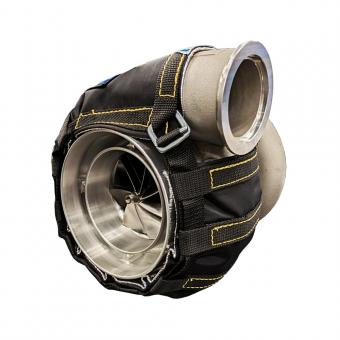
2) Turbo heat shield (hot spot management)

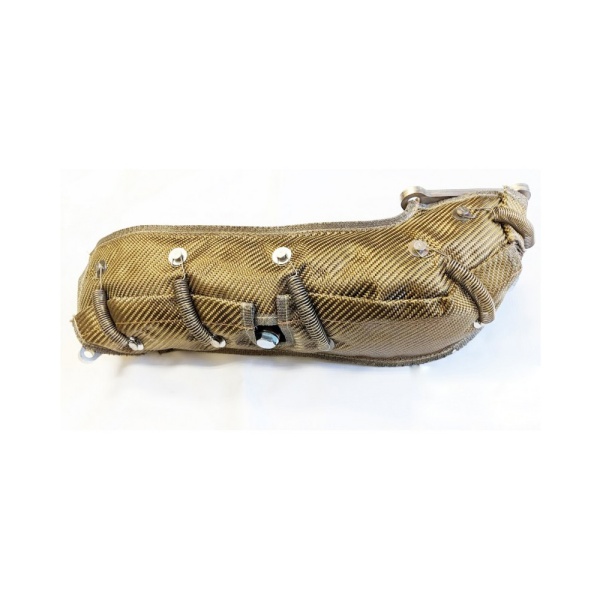
A turbo heat shield targets one of the highest heat sources in the engine bay. Reliable turbo shielding typically requires:

  • Stable spacing: preserve an air gap to reduce radiant transfer
  • Mechanical integrity: vibration-resistant mounting to prevent rattling and rub-through
  • Multilayer design: durable outer layer + insulation layer where necessary

When turbo surface temperatures are extreme, shielding alone may not be enough. Consider combining a shielding approach with source insulation solutions to reduce radiant output and stabilize surrounding component temperatures.


3) Catalytic converter heat shield (underbody protection)

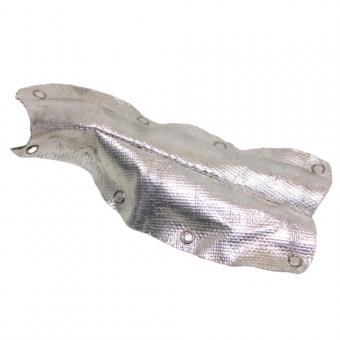
A catalytic converter heat shield is commonly used to protect underbody components and reduce heat exposure near floors, fuel lines, and surrounding plastic/trim. Underbody shields must handle water spray, salt, debris impact, and continuous vibration. Best practices include:

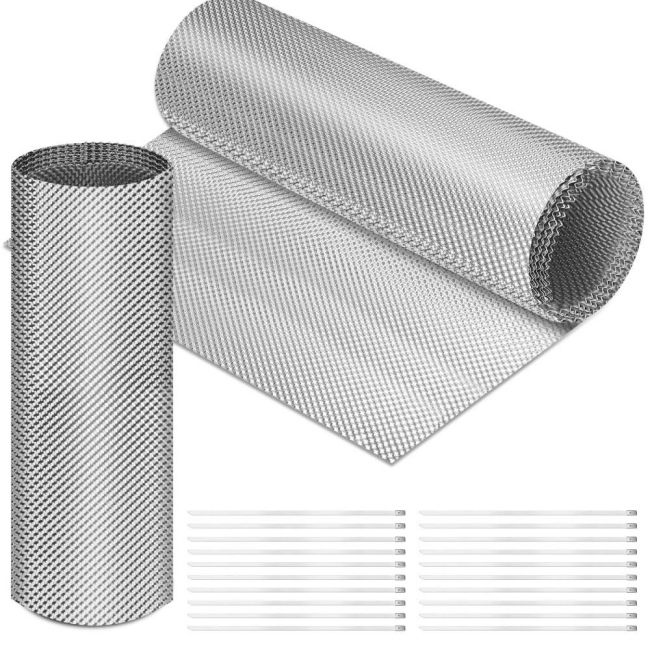
  • Corrosion-resistant outer layer (commonly stainless steel designs where applicable)
  • Secure mounting to avoid rubbing and noise
  • Edge control to avoid cutting adjacent hoses or wires

For localized sealing and edge reinforcement where applicable, consider heat shield tapes and barriers.

Catalytic converter heat shield installation showing secure mounting and maintained air gap – BSTFLEX


4) Intake heat shield (performance and heat soak control)

An intake heat shield focuses on reducing heat soak and stabilizing intake air temperature by shielding the intake path from nearby heat sources (exhaust manifolds, turbo, radiators). The goal is not only protection but also more consistent performance. Selection rules:

  • Block radiant heat from hot sources with a stable barrier and spacing
  • Control airflow so hot underhood air is not drawn into the intake
  • Prevent vibration wear at mounting points and edges

If you are building a complete thermal strategy, combine intake shielding with exhaust-side temperature control using exhaust insulation solutions.


Common failure modes (and how to prevent them)

  • Loss of air gap: flat shields in tight packaging underperform. Use designs that preserve spacing.
  • Rub-through under vibration: loose shields wear and fail. Secure mounting and edge control matter.
  • Ignoring nearby hoses/wiring: protect routes near exhaust heat with fire sleeve.
  • Heat shielding without source control: for severe heat sources, add exhaust insulation to reduce radiant output.

FAQ

Is an automotive heat shield the same as heat insulation?

Not exactly. An automotive heat shield blocks radiant heat and protects adjacent parts, while exhaust pipe thermal insulation reduces heat at the source. In severe heat zones, combining both usually delivers the most stable results.

Where is a turbo heat shield most effective?

A turbo heat shield is most effective when it preserves spacing, stays secure under vibration, and is paired with a broader exhaust thermal plan. For very high heat loads, consider source insulation solutions.

How do I protect hoses near exhaust heat?

Use dedicated hose and cable protection such as fire sleeve protection where routing is close to hot components. For localized edge reinforcement, use suitable heat shield tapes and barriers where applicable.

Do you provide technical documents for automotive heat insulation products?

Yes. For many products we provide datasheets and technical PDFs. Visit Download Technical Documents or request a document pack through Request a Quote.


Need help selecting an automotive heat shield or insulation structure?

Share your vehicle platform, heat source location (exhaust/turbo/catalyst/intake), clearance, mounting method, and target temperatures. We will recommend a practical heatshield and insulation approach and provide supporting technical documents.

Request a Quote Download Technical Documents

ニュースレターを購読する
毎月のプロモーションにご登録いただくと、最新の製品ニュースを入手できます。
メッセージを送ります
メッセージを送ります
あなたは私達のプロダクトに興味があり、詳細を知りたいのですが、ここにメッセージを残してください

製品

コンタクト