何を探していますか?
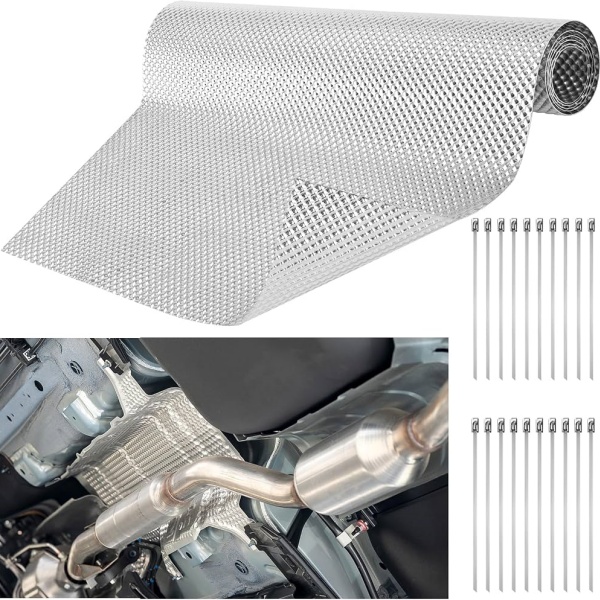
Look underneath a vehicle, around a catalytic converter, behind an exhaust manifold or along an exhaust tunnel and many metal heat shields share one obvious feature: the surface is not flat.
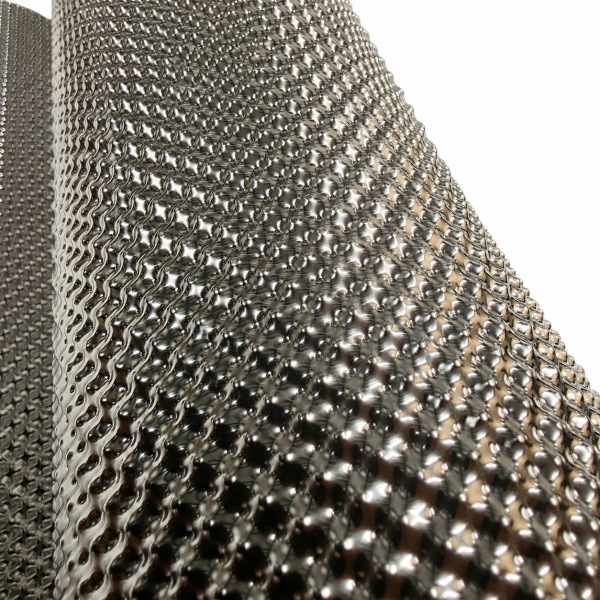
The dimples, raised ribs, pressed textures and repeating patterns found on automotive heat shields are functional engineering features. Embossing changes how a thin metal sheet behaves. Instead of relying only on material thickness for rigidity, a three-dimensional surface allows the shield to maintain its shape while keeping the component relatively thin and lightweight.
This is why embossed heat shield material is widely used for automotive exhaust systems, engine compartments, underbody thermal barriers and other applications where temperature, vibration, packaging space and vehicle mass must all be considered at the same time.
BSTFLEX manufactures several types of metal thermal barrier materials, including embossed stainless steel heat shield material, embossed aluminum heat shield material and Alloy 625 Inconel heat shield material for custom thermal management projects.
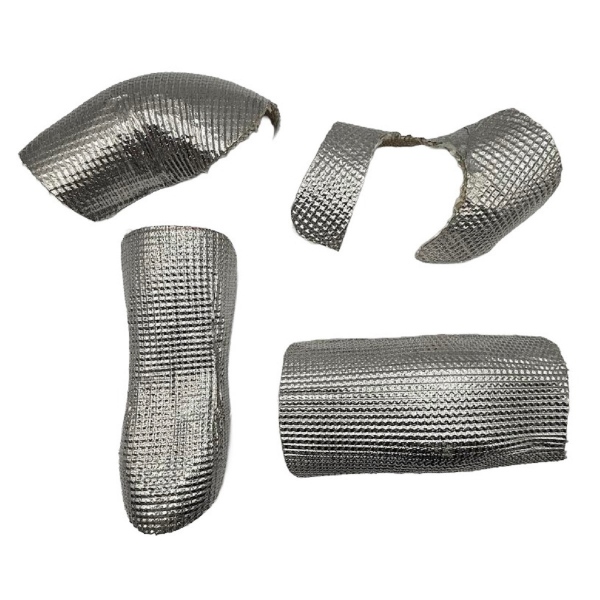
A flat sheet and an embossed sheet can be manufactured from the same metal and the same nominal thickness, yet their mechanical behavior can be very different.
A large area of thin flat metal can flex easily. When installed on a vehicle, it may also be exposed to vibration, engine movement, road excitation, pressure from airflow and repeated expansion and contraction as the exhaust system heats and cools.
Increasing sheet thickness is one way to increase stiffness, but it also adds weight and material consumption. Embossing provides another option.
By pressing a controlled three-dimensional pattern into the sheet, the manufacturer changes its cross-sectional geometry. Raised and recessed features make the panel more resistant to bending than an equivalent completely flat surface.
For automotive engineers, this creates an important opportunity: structural stability can be improved without depending exclusively on heavier-gauge metal.
The appearance of embossed heat shield sheet sometimes causes it to be treated as a patterned metal product. That description misses its primary purpose.
In automotive thermal management, the embossed profile can influence:
The optimum pattern depends on the base metal, sheet thickness, shield dimensions, forming depth and mounting method. A pattern that works well for a large aluminum underbody panel may not be the best configuration for a compact stainless steel exhaust manifold shield.
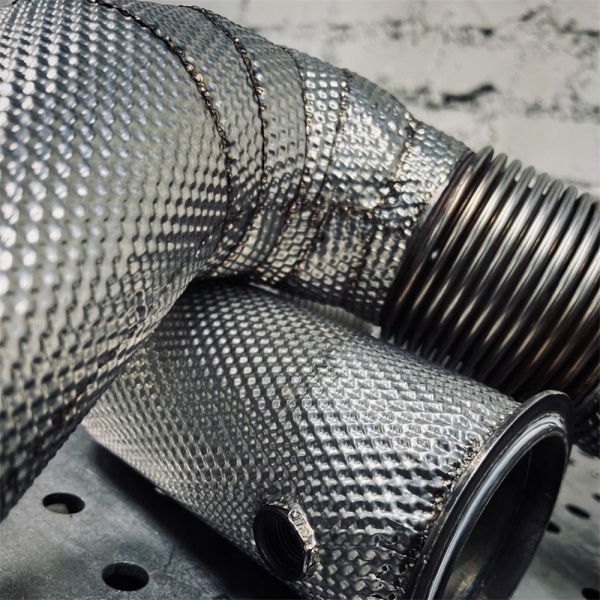
To understand why embossing works, consider a simple sheet of paper. A flat sheet bends easily. Once the same sheet is folded or formed into a three-dimensional profile, it becomes much more resistant to bending in certain directions.
Embossed metal follows the same general structural principle.
The raised pattern introduces local geometry into an otherwise flat surface. Instead of the entire panel behaving as one thin plane, the formed sections resist bending and help distribute mechanical loads across the part.
For heat shield design, this can be particularly useful when the shield must cover a relatively large area but the manufacturer wants to avoid unnecessary mass.
The objective is therefore not simply to produce the thinnest possible metal. It is to find an appropriate combination of:
A single heat shield may appear to be a small vehicle component, but a complete platform can use multiple thermal barriers around the engine, exhaust system, floor, fuel system and aftertreatment equipment.
Adding unnecessary thickness to every shield increases total vehicle mass as well as raw material consumption.
Embossed metal gives designers another way to achieve the required structural behavior. Instead of solving every stiffness problem by increasing gauge, the geometry of the material itself becomes part of the component design.
This is one reason embossed aluminum heat shield material is particularly attractive for large-area applications. Aluminum already offers low density, and embossing can make a thin sheet better suited to handling and installation.
For hotter areas where stainless steel is preferred, embossing can similarly help create a stable thin-wall shield without turning the part into an unnecessarily heavy metal cover.
A vehicle heat shield never operates in a static environment.
During service it can be exposed to:
A large flat panel can develop unwanted movement if its stiffness, mounting points and geometry are not properly designed. In some cases this contributes to buzzing, rattling or fatigue around attachment points.
An embossed profile can help increase panel rigidity and alter how the sheet responds mechanically. It should not be viewed as a complete NVH solution by itself; mounting design, clearances, fasteners and component geometry remain equally important.
However, embossing gives the thermal engineer another structural tool for controlling the behavior of a thin metal heat shield.
Noise, vibration and harshness are not limited to engines, suspensions or interior trim. A poorly designed thermal shield can also become an NVH source.
This is especially relevant for large underbody shields positioned close to an exhaust system. Even if the part performs its thermal function correctly, unwanted rattling or resonance can create a vehicle-quality problem.
During OEM development, engineers therefore evaluate thermal performance and mechanical behavior together.
Typical design considerations include:
Embossing should not be treated as a substitute for proper thermal engineering. The thermal performance of an automotive heat shield depends on the entire installation rather than the surface pattern alone.
Important factors include:
Where the embossed geometry helps preserve the designed separation or structural shape of a thin shield, it can contribute indirectly to consistent thermal performance. Its most obvious engineering contribution, however, is structural rather than simply increasing temperature resistance.
Many rigid automotive heat shields work most effectively when they are separated from the hot surface rather than pressed directly against it.
The reason is straightforward: direct metal-to-metal contact creates a conductive heat path.
When a controlled space exists between the exhaust component and the shield, the design can reduce direct conduction and use the shield primarily to manage radiant heat reaching the protected side.
This means engineers should evaluate the complete assembly rather than specifying an embossed sheet in isolation.
The relevant questions include:
Stainless steel is frequently used for rigid heat shields located in demanding exhaust environments. It provides useful mechanical strength, corrosion resistance and durability when exposed to repeated heating and cooling.
When thin stainless steel is embossed, the structured surface increases rigidity and makes the material more suitable for formed automotive components.
Typical applications for embossed stainless steel thermal barrier sheet include:
The final stainless steel grade should be selected according to the application environment, corrosion conditions, forming requirements and thermal duty.
Aluminum follows a different design logic.
Its primary attraction in vehicle thermal management is low weight combined with good formability and useful radiant heat shielding characteristics. This makes it especially practical for large panels positioned away from the most severe exhaust hot zones.
BSTFLEX embossed aluminum heat shield material can be used for applications such as:
Embossing is particularly useful for aluminum because broad thin panels can otherwise be relatively flexible. A formed surface improves their structural behavior while retaining the weight advantage associated with the base material.
| Design Factor | Embossed Aluminum | Embossed Stainless Steel |
|---|---|---|
| Primary Advantage | Low weight | Durability in demanding hot zones |
| Typical Installation | Underbody, floor, engine bay and secondary barriers | Exhaust manifold, converter, muffler and hot-side exhaust |
| Panel Weight | Lower | Higher for comparable geometry |
| Formability | Well suited to lightweight formed parts | Suitable for strong formed exhaust shields |
| Mechanical Robustness | Suitable where weight is prioritized | Preferred where mechanical demand is higher |
| Embossing Benefit | Stiffens lightweight sheet | Supports rigid thin-gauge construction |
The correct choice is determined by the thermal zone and mechanical environment rather than by embossing alone.
Some exhaust systems operate beyond the conditions normally assigned to conventional aluminum or standard stainless steel shields. High-output turbocharged engines, motorsport systems and specialized industrial exhaust assemblies can require higher-performance nickel alloys.
For these applications, BSTFLEX also supplies Alloy 625 Inconel heat shield material.
Inconel is generally considered when extreme thermal exposure, oxidation resistance and high-temperature mechanical performance justify the greater material cost.
It should therefore be treated as an engineering option for severe operating conditions rather than an automatic upgrade for every automotive heat shield.
There is no universal embossed pattern suitable for every thermal barrier.
Depending on the manufacturing process and component requirements, a metal heat shield may use:
The pattern should be selected according to the required stiffness, sheet gauge, forming direction and finished component geometry.
A complex pattern is not automatically better. The goal is to create sufficient structural stability while preserving manufacturability.
Heat shield material is often further stamped, drawn, bent or trimmed after the initial sheet or coil has been produced.
For this reason, embossing must be compatible with downstream forming.
An overly aggressive pattern may interfere with deep drawing or cause unpredictable material flow in a complex component. A pattern that is too shallow may fail to provide the required rigidity.
OEM heat shield development therefore needs to consider the sequence of manufacturing operations, including:
One of the most common sourcing mistakes is requesting a metal heat shield only by material and thickness.
For example:
"We need stainless steel heat shield sheet."
This information is not sufficient to define a reliable automotive component.
The buyer should also consider:
The same sheet thickness can behave very differently depending on alloy, pattern and finished geometry.
Different customers purchase thermal protection materials at different stages of the manufacturing chain.
An exhaust stamping company may require embossed sheet or coil that will later be pressed into finished shields. An automotive Tier supplier may instead require a shaped component manufactured according to a drawing.
When requesting a quotation, buyers should clearly identify whether they require:
This distinction is particularly important for B2B heat shield sourcing because tooling, dimensional tolerances and production volume can significantly affect the manufacturing method.
Embossed metal thermal barriers can be found throughout a vehicle wherever a rigid, lightweight shield is needed between a heat source and a temperature-sensitive component.
The shield must withstand engine vibration and repeated thermal cycling while maintaining clearance from the manifold and nearby components.
Heat shields around converters protect adjacent floor structures, wiring and other underbody systems from concentrated radiant heat.
Long underbody exhaust runs often require shielding where pipes pass near the vehicle floor, fuel systems or body structures.
Large shield surfaces around mufflers benefit from a combination of low weight and adequate panel stiffness.
Compact turbocharged engine bays create severe packaging and thermal-management challenges. Stainless steel or higher-performance alloys can be considered according to the operating environment.
Lightweight aluminum barriers can help protect wiring, intake components, electronics and body panels from radiant heat generated by exhaust-side components.
The technology is not limited to passenger vehicles.
Embossed metal heat shields can also be used on:
These applications may place greater emphasis on durability because engines can operate for extended periods under high load while exposed to dirt, water, vibration and mechanical impact.
A useful RFQ should provide enough information for the supplier to understand both the material requirement and the finished application.
| Specification Item | Information to Provide |
|---|---|
| Application | Exhaust manifold, catalytic converter, underbody, turbo, muffler, engine bay or other location |
| Base Material | Aluminum, stainless steel, Inconel or material to be recommended |
| Grade | Required alloy grade if already specified |
| Thickness | Nominal sheet thickness or acceptable range |
| Embossing | Existing pattern, sample or required structural objective |
| Dimensions | Width, length or coil specification |
| Processing | Sheet, blank, stamping, forming or finished component |
| Drawing | 2D drawing, 3D model or physical sample if available |
| Quantity | Prototype quantity and expected annual demand |
BSTFLEX supports thermal management projects from raw heat shield material through customized OEM applications.
Available options can include:
For current product options, see:
Embossed heat shield material is metal sheet or foil that has been mechanically formed with a raised and recessed surface pattern. The embossed geometry increases the structural stiffness of a thin sheet and makes it suitable for lightweight automotive thermal barriers.
Dimples or other embossed features add three-dimensional geometry to thin metal. This can improve panel rigidity and help a heat shield maintain its designed shape under vibration and thermal cycling.
For many thin-gauge automotive shields, embossing offers structural advantages because the formed surface is more resistant to bending than a completely flat sheet of similar material and thickness. The appropriate construction still depends on the application.
No. The base alloy primarily determines the material's high-temperature capability. Embossing changes the geometry and mechanical behavior of the sheet; it does not convert aluminum or stainless steel into a higher-temperature alloy.
Aluminum is attractive for lightweight radiant barriers and large-area shields. Stainless steel is generally preferred in more demanding exhaust-side environments. Material selection should be based on thermal load, weight, corrosion, vibration and installation position.
Nickel-based alloys such as Inconel 625 can be considered for severe thermal environments where high-temperature mechanical performance and oxidation resistance are important. They are generally reserved for applications that justify their higher material cost.
Yes. Embossing geometry can be developed according to material thickness, finished part dimensions, forming requirements and production volume. Customers can provide drawings, samples or an existing heat shield for evaluation.
Depending on the project, material can be supplied for further processing or developed into application-specific parts. RFQs should specify whether sheet, blanks, formed components or finished OEM heat shields are required.
The value of an embossed automotive heat shield does not come from the surface pattern alone. It comes from using geometry, material and installation design together.
A properly selected embossing pattern can give thin metal greater structural stability, support lightweight construction and help a finished heat shield tolerate the vibration and thermal cycling found in real vehicles. Aluminum, stainless steel and Inconel can then be selected according to the thermal zone in which the shield will operate.
For OEM exhaust systems, engine compartments, catalytic converters, turbochargers or underbody applications, BSTFLEX can review drawings, samples and operating requirements to develop an appropriate embossed metal heat shield solution.
Send the required material, thickness, dimensions, drawing, annual quantity and application information to request an engineering review, sample or quotation.

No.10, Chuangxin North Road, Nanshan Park, Ningguo Economic and Technological Development Zone, Ningguo City, Anhui Province, China
tel/Whatsapp : 0086-15856303740
Eメール : sales@bstbraidedsleeve.com
Skype : vanesa-cheng