In turbocharged engines, managing exhaust heat is not optional—it is critical for performance, durability, and safety. One of the most effective yet often overlooked solutions is the downpipe blanket. Designed specifically for the extreme thermal environment of turbo downpipes, a downpipe blanket significantly reduces radiant heat, protects surrounding components, and stabilizes exhaust gas temperatures for improved system efficiency.
This page provides a complete, engineering-focused overview of downpipe blankets, including how they work, why they are necessary, material options, applications, and selection guidance for automotive and industrial exhaust systems.

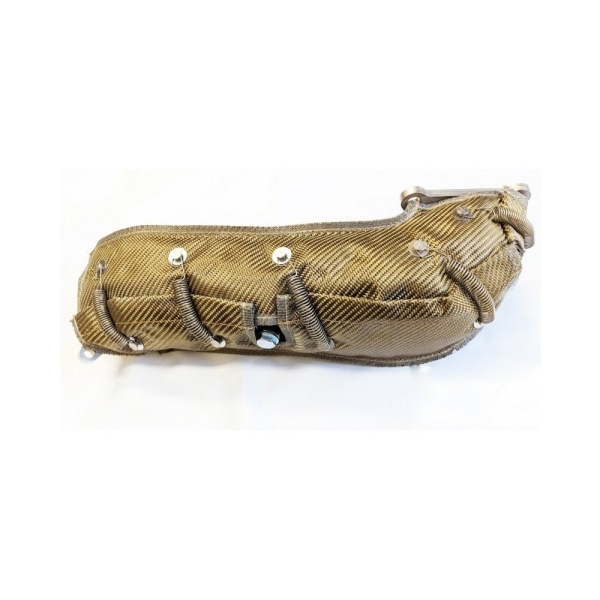
A downpipe blanket is a high-temperature thermal insulation jacket engineered to wrap around the turbo downpipe—the exhaust section immediately downstream of the turbocharger. This area experiences some of the highest sustained temperatures in the exhaust system, often exceeding 600–900 °C under load.
The blanket works by combining low-conductivity insulation fibers with high-temperature-resistant outer layers to achieve three primary functions:
Contain radiant heat generated by hot exhaust gases
Reduce heat transfer to nearby components
Maintain higher exhaust gas velocity inside the pipe
Unlike traditional exhaust wraps, a downpipe blanket is a formed, layered insulation system designed for long-term durability, repeated thermal cycling, and harsh under-hood environments.
The turbo downpipe is exposed to:
Continuous high exhaust gas temperatures
Rapid thermal cycling during acceleration and deceleration
Confined engine bay airflow
Without insulation, this heat radiates outward, elevating under-hood temperatures and stressing surrounding components.
Premature aging of wiring harnesses and sensors
Degradation of rubber hoses and plastic connectors
Increased intake air temperatures
Heat soak reducing turbo efficiency
Higher risk of heat-related failures
A properly engineered downpipe blanket addresses these issues directly at the source.
By limiting radiant heat loss from the downpipe, a downpipe blanket can dramatically lower ambient engine bay temperatures, protecting sensitive components.
Containing heat within the exhaust stream helps maintain exhaust gas energy, supporting faster turbo response and more stable boost characteristics.
Critical parts such as oil lines, brake lines, wiring looms, and firewall insulation benefit from reduced thermal exposure.
Lower external temperatures reduce thermal fatigue, extending the service life of both exhaust components and adjacent systems.
Compared with loose exhaust wraps, a downpipe blanket offers consistent coverage, secure fastening, and a professional appearance.
The performance of a downpipe blanket depends heavily on its material construction. Industrial-grade blankets typically use a multi-layer design optimized for both insulation and durability.
Common insulation materials include:
Fiberglass needle mat for cost-effective heat resistance
High-silica insulation for extreme temperature environments
Basalt or ceramic fiber for continuous high-heat exposure
These materials provide low thermal conductivity while remaining stable under prolonged heat.
High-temperature sewing threads such as stainless steel wire, silica yarn, or aramid threads are used to prevent delamination and maintain structural integrity during vibration and thermal cycling.
The outer surface is designed to withstand abrasion, oil exposure, moisture, and mechanical wear. Typical options include:
Heat-treated fiberglass fabric
Silica fabric with anti-fray treatment
Stainless steel mesh reinforcement for extreme conditions
Downpipe blankets are widely used across performance and OEM automotive sectors, including:
Gasoline and diesel turbo engines
Performance and modified vehicles
Heat management in compact engine bays
Sustained high exhaust temperatures
Maximum thermal containment requirements
Protection of lightweight surrounding components
Long operating cycles
High exhaust gas flow
Improved reliability under continuous load
Beyond automotive use, downpipe blankets are increasingly applied in industrial turbo systems:
Industrial diesel generators
Turbocharged compressors
Power generation equipment
Marine turbo exhaust systems
In these environments, thermal insulation improves operational stability, enhances safety, and reduces heat-related maintenance issues.
While both solutions aim to reduce exhaust heat, their performance and durability differ significantly.
Downpipe blankets are:
Multi-layered insulation systems
Designed for specific pipe sections
More resistant to oil, vibration, and thermal cycling
Exhaust wraps are:
Single-layer textile wraps
Dependent on installation technique
More prone to wear and moisture retention
For turbo downpipes, where heat concentration and reliability are critical, a dedicated downpipe blanket is generally the superior solution.
Selecting the correct downpipe blanket requires consideration of several engineering factors:
Evaluate both continuous and peak temperature exposure. Turbo downpipes often require insulation rated for sustained high heat with additional safety margin.
The blanket should fully cover the hottest section of the downpipe without interfering with flanges, sensors, or mounting points.
Consider exposure to oil, water, road debris, and vibration. Reinforced outer layers are recommended for harsh environments.
Confined engine bays may require thinner, high-efficiency insulation materials to balance clearance and thermal performance.
A quality downpipe blanket is designed for straightforward installation using stainless steel hooks, springs, or fastening systems. Proper fitment ensures:
Consistent thermal coverage
No movement during operation
Long-term durability
Periodic inspection is recommended, particularly in motorsport or high-vibration applications, to ensure the blanket remains securely positioned.
BSTFLEX downpipe blankets are engineered for professional automotive and industrial heat management applications. Key advantages include:
High-temperature insulation materials selected for demanding environments
Reinforced stitching and construction for vibration resistance
Custom sizing and configuration available for OEM and aftermarket needs
Manufacturing under ISO9001:2015 and IATF16949 quality systems
Proven experience in exhaust and turbo thermal protection solutions
Whether for performance vehicles, heavy-duty diesel systems, or industrial turbo equipment, BSTFLEX provides reliable downpipe blanket solutions tailored to real-world operating conditions.
If you are evaluating thermal protection solutions for turbo downpipes, selecting a professionally engineered downpipe blanket is one of the most effective steps you can take to control heat, improve performance, and extend component life.
タグ :