何を探していますか?
高温になった排気管は、その直径から想像されるよりもはるかに大きな熱問題を引き起こす可能性がある。
車両、発電機筐体、船舶のエンジンルーム、あるいは産業機械においては、排気管は電気配線、油圧ホース、燃料ライン、ボディパネル、センサー、あるいは整備エリアからわずか数センチメートルしか離れていない場所に敷設されている場合があります。排気システムが作動温度に達すると、このわずかな隙間が、熱設計全体における重要なポイントとなる可能性があります。
ここは排気管断熱材必要となる。
適切な断熱システムは、単に高温のパイプを覆うだけではありません。振動、繰り返される温度変化、汚染、移動、そしてメンテナンスに耐えながら、熱を制御する必要があります。
そのため、断熱材を選ぶ際に温度定格だけを基準にするのは、ほとんどの場合不十分です。
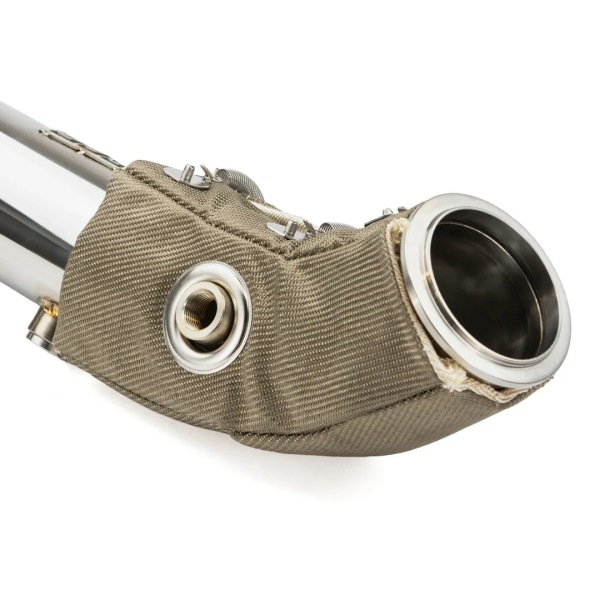
BSTFLEXは開発しています排気熱シールド断熱材自動車、ディーゼルエンジン、船舶、発電機、産業用排気システム向け。取り外し可能なパイプブランケット、断熱材、ヒートラップ、フレキシブルスリーブ、金属製断熱材などを含む。
断熱材を選ぶ前に、解決すべき問題を明確にしましょう。
排気管に断熱材が必要な場合、以下の理由が考えられます。
近くの配線ハーネスが過熱しています。
筐体内の温度が高すぎます。
作業員は高温の表面にさらされる。
熱が燃料ラインまたは油圧ラインに到達している。
車両の床が過剰な輻射熱を受けている。
機関室の換気が不十分である。
排気管は下流側でより多くの熱を保持する必要がある。
周囲の機器は現在の温度に耐えられません。
これらは異なる問題です。
排気管の温度が同じであっても、異なる断熱システムが必要になる場合がある。
例えば、車両の床を輻射熱から保護するには反射シールドが適しているかもしれないし、発電機の排気管の外面温度を下げるには厚手の取り外し可能な断熱ブランケットが必要になるかもしれない。
排気管の断熱材は、一般的に4つの実用的なカテゴリーに分類されます。
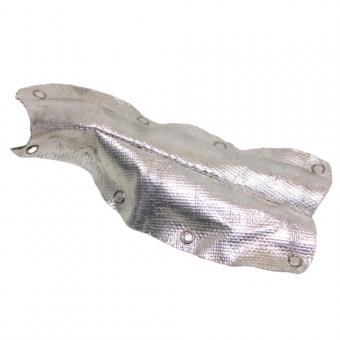
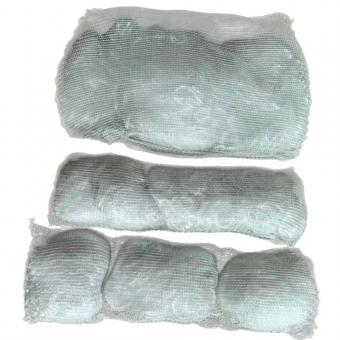
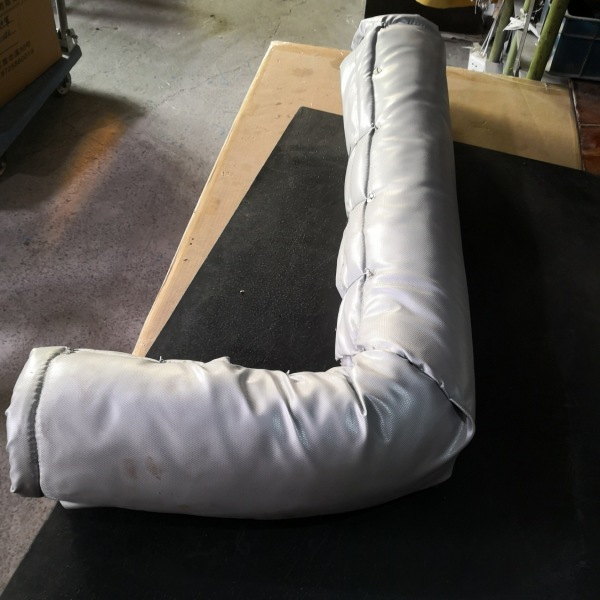
取り外し可能なブランケットは、特定のパイプ径または排気形状に合わせて製造されます。
通常、以下のものが含まれます。
内部に耐熱層を設ける。
断熱材;
外部保護層。
機械的締結。
この構造は、メンテナンス時のアクセスが重要な場合に特に適しています。
代表的な設置例は以下のとおりです。
ディーゼル発電機
船舶用エンジン
産業用エンジン
大型排気管。
消音器;
排気エルボ。
ブランケットは一枚の長い布ではなく、複数のセクションに分けて製造できるため、技術者は検査に必要なセクションだけを取り出すことができる。
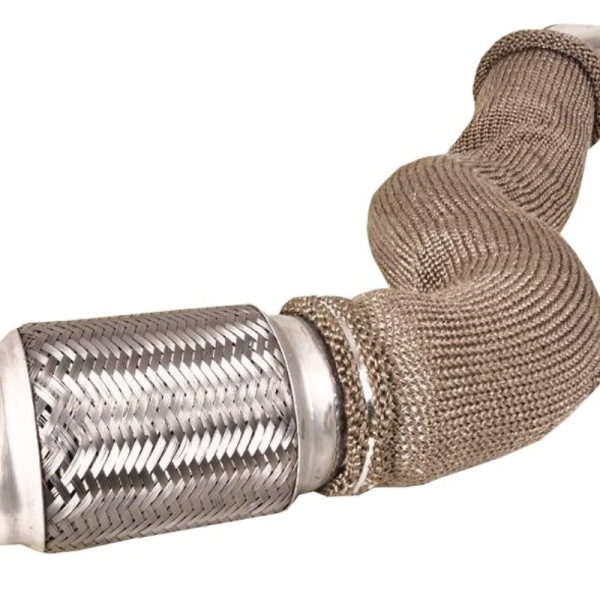
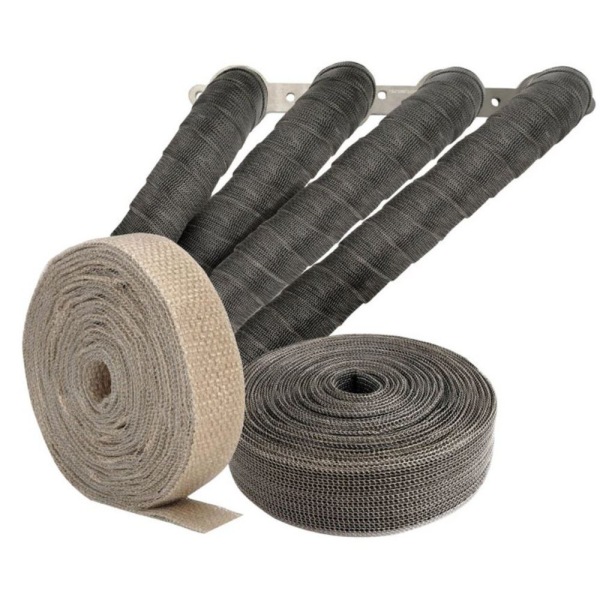
排気管保護材はロール状で供給され、パイプに螺旋状に巻き付けられます。
これは以下の用途に広く使用されています。
自動車用ヘッダー;
オートバイ;
高性能排気システム
小径排気管
特注排気管の製作。
BSTFLEXは排気管とヘッダーの耐熱ラップさまざまな高温繊維構造において。
ラップは長い管状の表面を断熱する簡単な方法だが、排気システムを定期的に点検のために開ける必要がある場合には不便である。
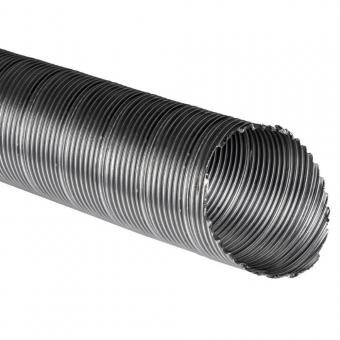
排気管によっては、特注のブランケットではなく、スリーブタイプのソリューションが必要となる場合がある。
柔軟性のある断熱材は、直径や形状が比較的単純な小型の排気管に取り付けることができます。
例えば、BSTFLEXディーゼルヒーター排気断熱材ディーゼル暖房システムなどの用途で使用されるコンパクトな排気管向けに設計されています。
スリーブや断熱材を使ったソリューションは、特に以下のような場合に有効です。
設置スペースには限りがあります。
パイプは比較的小さい。
継続的な監視が必要です。
硬質のシールドは設置が難しいだろう。
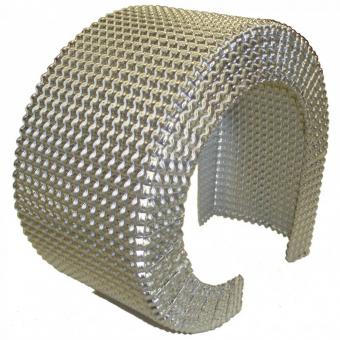
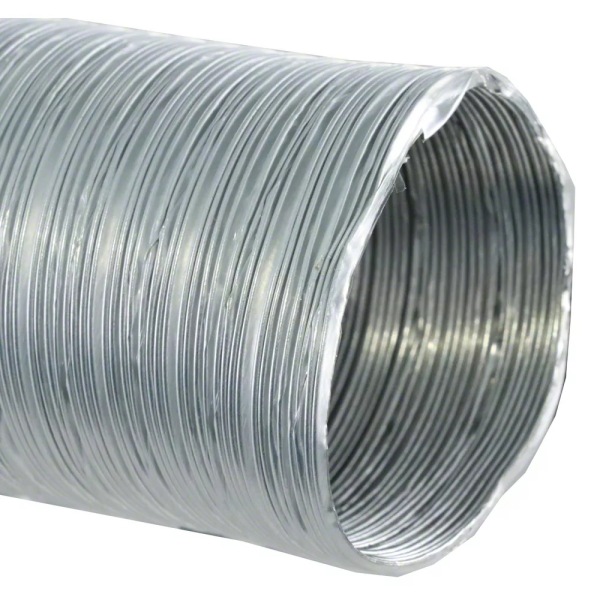
金属製のシールドは必ずしもパイプに接触するとは限りません。
その代わりに、通常は遮蔽板と熱源との間に適切な間隔を設けて設置される。
この配置は、近くの部品への放射熱を低減するのに特に効果的です。
一般的な材料には以下が含まれます。
アルミニウム;
ステンレス鋼;
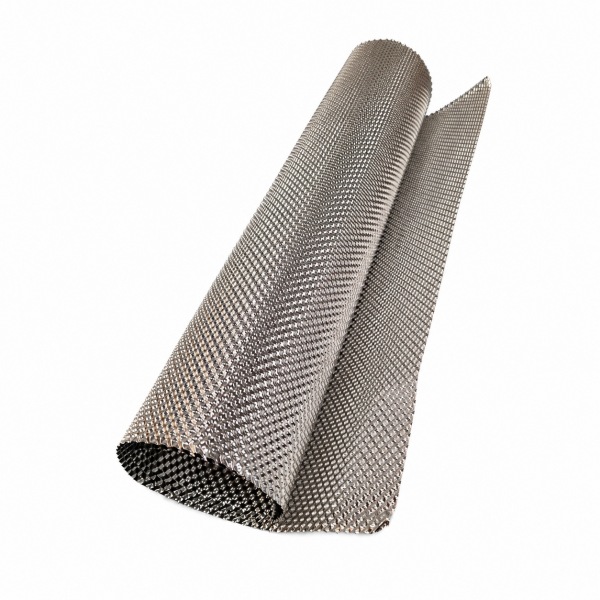
エンボス加工されたステンレス鋼。
ニッケル合金。
金属製の遮熱板は、次のような場合に好ましい場合があります。
設置時の厚さは低く保つ必要がある。
機械的衝撃耐性は重要である。
盾は特定の形状を維持しなければならない。
放射熱が主な懸念事項である。
過酷な環境向けには、BSTFLEXは合金625インコネル製遮熱板コンポーネント。
これらの用語はしばしば同義語として使われるが、工学的な機能は異なる場合がある。
排気管断熱材通常はパイプを覆い、断熱層を通じた熱伝達を制限する。
1排気管遮熱板通常は、パイプと保護が必要な部品の間に設置されます。
片方には熱が含まれている。
もう一方はそれをブロックするか、リダイレクトします。
排気システムによっては、両方が使用される場合もある。
ディーゼルエンジンでは、排気管の周りに取り外し可能な断熱ブランケットが取り付けられている場合があり、また、近くの電気機器筐体はステンレス鋼製のシールドで保護されている。
That combination can provide better thermal control than either solution alone.
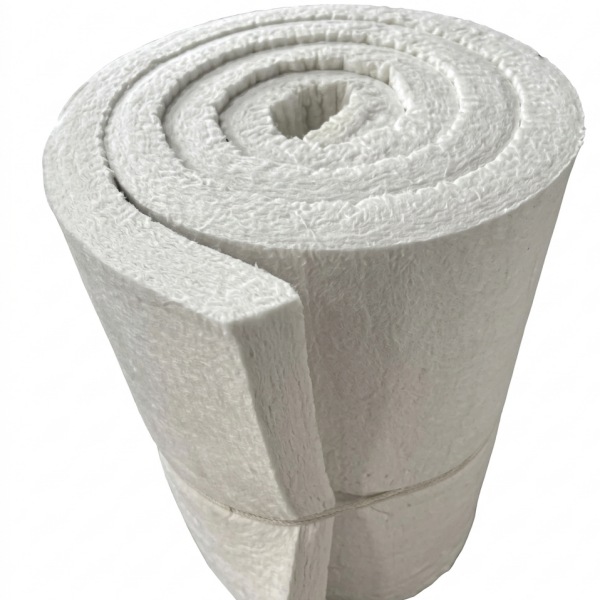
Material selection should begin with continuous operating conditions.
Fiberglass is one of the most widely used materials for exhaust insulation.
Advantages include:
flexibility;
good thermal resistance;
availability in many constructions;
practical manufacturing cost.
Fiberglass can be used in:
blankets;
tapes;
wraps;
sleeves;
composite heat shields.
It is often suitable for moderate and high-temperature exhaust applications where extreme temperature exposure is not continuous.
High silica material is selected when higher heat resistance is required.
It may be used as:
outer fabric;
inner hot-side layer;
insulation textile;
heat-resistant wrap.
Silica constructions are useful around:
turbocharged exhaust systems;
manifolds;
high-output diesel engines;
industrial exhaust equipment.
Basalt-based materials are frequently used in automotive and performance exhaust insulation.
They offer:
flexible installation;
strong heat resistance;
good compatibility with wrapped exhaust tubes.
Basalt is often seen in heat wrap and shaped blanket applications.
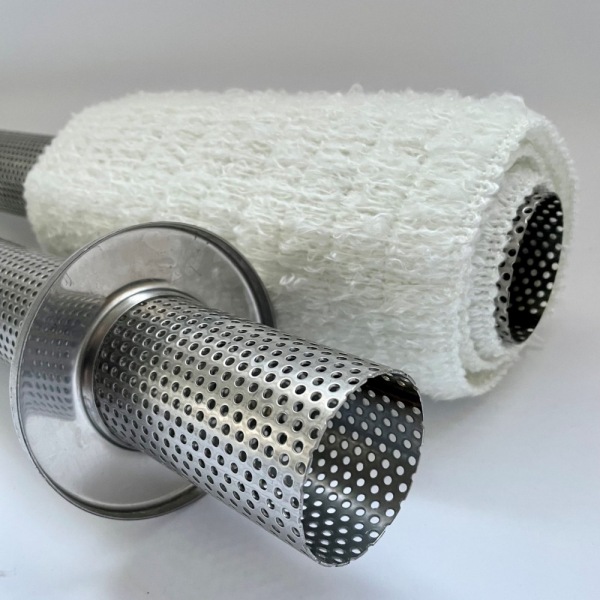
Where a greater temperature reduction is required within limited space, high-temperature insulation cores may be used.
These materials are normally enclosed within:
fiberglass fabric;
silica fabric;
stainless steel foil;
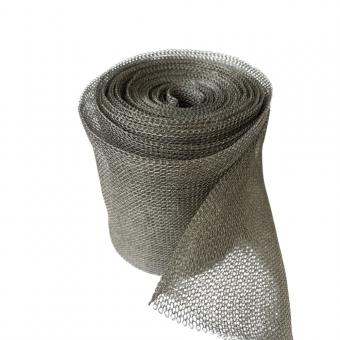
stainless steel mesh.
The insulation core should not be evaluated separately from the blanket construction.
Aluminum is primarily used as a reflective surface rather than a thick insulation medium.
Its low weight makes it particularly suitable for:
automotive underbody protection;
exhaust pipe heat shields;
muffler shields;
vehicle floor insulation.
Stainless steel is preferred where the exhaust heat shield also requires mechanical strength.
It performs well in applications exposed to:
vibration;
road debris;
repeated thermal cycling;
higher temperatures.
Nickel alloys such as Alloy 625 are reserved for demanding environments where temperature, oxidation and corrosion requirements exceed the limits of conventional sheet metals.
A thicker insulation layer generally reduces heat transfer more effectively, but this does not mean the thickest available blanket is automatically the best design.
Increasing thickness can create problems with:
component clearance;
mounting brackets;
adjacent pipe routing;
sensor access;
engine compartment packaging.
In tightly packaged automotive systems, only a few millimeters of space may be available.
In a large generator enclosure, considerably thicker insulation may be practical.
The correct insulation thickness should therefore balance thermal performance with installation geometry.
Diesel exhaust pipes frequently operate for long periods under load.
Heat containment becomes especially important in:
trucks;
construction equipment;
agricultural machinery;
industrial engines;
stationary power systems.
A removablediesel exhaust pipe insulationsystem can reduce heat released into the surrounding engine compartment while still allowing service access.
Generator exhaust piping often runs through compact acoustic enclosures.
This creates a concentrated heat source close to:
electrical cabinets;
acoustic materials;
engine components;
service areas.
A generator exhaust insulation system commonly uses removable sections around pipes, elbows and silencers.
This also allows the insulation to be removed during maintenance without replacing the entire system.
Marine exhaust systems present additional concerns including:
limited ventilation;
moisture;
salt exposure;
vibration;
restricted service space.
For dry marine exhaust systems, segmented blankets are often preferred because they allow easy access to flanges and exhaust connections.
Passenger and performance vehicles use exhaust insulation for:
headers;
downpipes;
catalytic converters;
center exhaust pipes;
mufflers.
Depending on available space, solutions may include:
wrap;
shaped blanket;
metal shield;
reflective barrier.
Industrial engines and machinery may use large-diameter exhaust lines that require customized blanket sections.
These applications often place greater importance on:
durability;
repeatable installation;
service access;
identification of individual insulation sections.
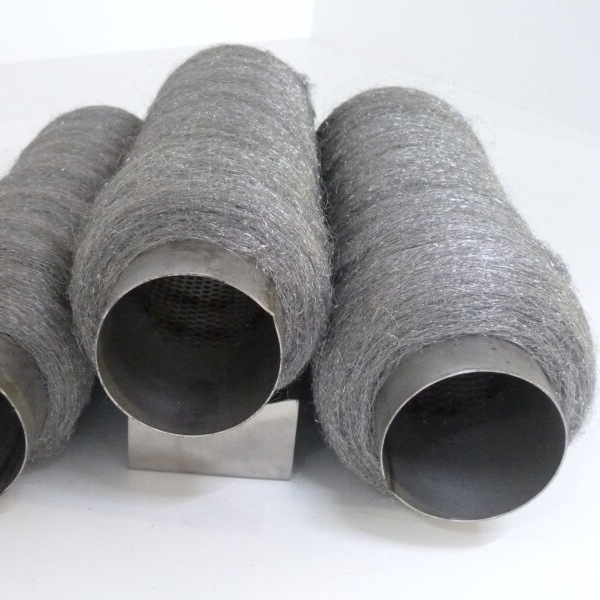
A bend is often more difficult to insulate than a straight pipe.
Wrap can follow gradual bends, but large industrial elbows may benefit from a fitted insulation blanket.
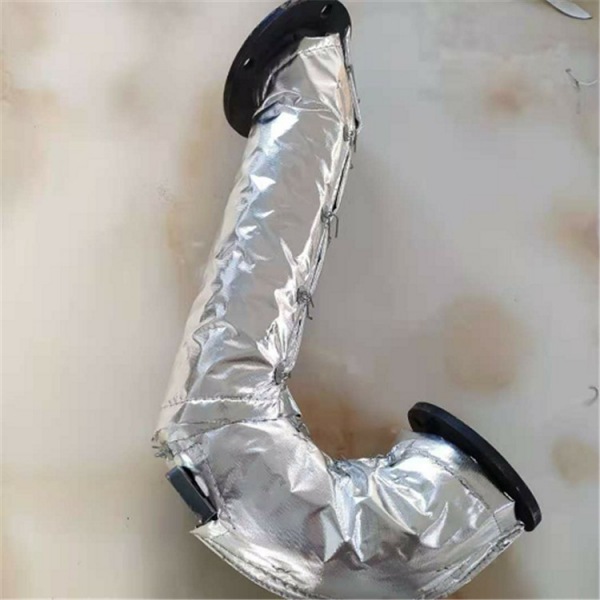
The BSTFLEXThermal Insulation Elbow Blanketis designed for curved exhaust geometry where a standard flat insulation section cannot maintain consistent coverage.
A well-designed elbow blanket should consider:
bend radius;
flange position;
pipe diameter;
seam location;
fastener access.
One of the most common weaknesses in an exhaust insulation system is the flange area.
A thick blanket may work well on the pipe but leave a large exposed metal flange.
That exposed section can become a strong local heat source.
For higher-performance systems, insulation should therefore be designed around:
flange diameter;
bolt access;
connection points;
sensors;
expansion joints.
A removable flap or separate flange blanket may be used where regular access is required.
For serious OEM projects, saying “we need exhaust insulation” is not enough.
A better specification is:
exhaust pipe operating temperature;
ambient temperature;
pipe diameter;
required outer surface temperature;
insulation thickness limit;
airflow condition.
This allows the insulation design to be evaluated against a measurable target.
Without these conditions, it is difficult to compare two insulation systems accurately.
Maintenance requirements are particularly important for:
marine engines;
generators;
mining equipment;
construction machinery;
industrial engines.
If technicians need frequent access to exhaust joints or engine components, permanent wrap can create additional maintenance work.
A removable blanket is usually more practical in these situations.
A segmented system may be designed so that:
each section has an identification mark;
only the required section is removed;
the blanket can be reinstalled after inspection.
This reduces disruption during service.
A high published temperature rating does not guarantee that the complete insulation system will perform correctly.
The full assembly must be considered.
An insulation material that performs well in a laboratory may fail quickly if it rubs continuously against a bracket or neighboring component.
Insulation should not prevent access to:
sensors;
clamps;
inspection ports;
flange bolts.
An exhaust system may need different thermal solutions in different areas.
For example:
manifold: shaped blanket;
straight pipe: wrap;
elbow: removable blanket;
muffler: metal shield.
The outer layer must suit the operating environment, not just the temperature.
Instead of selecting exhaust insulation by material name, use the following sequence.
For a simple tubular pipe:
Consider exhaust wrap or sleeve insulation.
For a pipe that requires regular inspection:
Use a removable pipe insulation blanket.
For an irregular elbow or flange:
Use a custom shaped blanket.
For protecting a nearby panel from radiant heat:
Use a metal or reflective heat shield.
For extreme heat and demanding environments:
Evaluate high-silica, high-temperature fiber, stainless steel or nickel-alloy constructions.
This approach is more reliable than choosing one product type for the complete exhaust system.
For accurate design and quotation, provide:
Pipe dimensions
outside diameter;
overall insulated length;
bend radius;
flange dimensions.
Temperature
normal operating temperature;
maximum temperature.
Installation environment
automotive;
marine;
generator;
industrial;
outdoor;
enclosed.
Service requirement
removable;
permanent;
frequency of maintenance.
Performance requirement
target external temperature;
maximum insulation thickness.
Project information
sample or drawing;
prototype quantity;
expected production volume.
The more complete the input data, the easier it is to design an insulation system that fits correctly from the first prototype.
Exhaust pipe insulation is worth considering whenever an exhaust line creates unacceptable heat exposure for the surrounding system.
The decision should be driven by actual conditions rather than by appearance.
If the objective is to lower heat around the pipe, protect surrounding components or create a safer service environment, an insulation blanket, wrap, sleeve or heat shield may be appropriate.
For applications involving multiple exhaust components, the best result often comes from combining several insulation methods.
BSTFLEX manufacturesexhaust heat shield insulation, removable blankets, exhaust wraps, lagging and custom metal heat shields for automotive, marine, diesel, generator and industrial exhaust systems.
排気管の断熱材を特注する場合は、管の寸法、使用温度、設置環境、および必要数量をお知らせください。そうすることで、一般的な耐熱温度ではなく、実際の排気システムに適した断熱構造を選択することができます。

No.10, Chuangxin North Road, Nanshan Park, Ningguo Economic and Technological Development Zone, Ningguo City, Anhui Province, China
tel/Whatsapp : 0086-15856303740
Eメール : sales@bstbraidedsleeve.com
Skype : vanesa-cheng