何を探していますか?
排気システムは、車両やエンジン設備の中で最も集中した熱源の一つです。ヘッダー、マニホールド、ダウンパイプは、電気配線、ホース、センサー、ボディパネル、吸気系部品からごく近い距離でしか動作できません。スペースが限られている場合、その熱を制御することは、オプションの付属品ではなく、システム設計の一部となります。
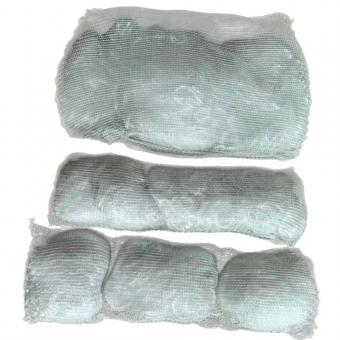
排気管ラップこれは、熱パイプに直接断熱材を取り付ける最も簡単な方法の1つです。
また次のように説明される排気熱ラップ、排気管ラップ、ヘッダーラップ排気断熱ラップとは、排気管の周囲に重ねて設置される、耐熱性に優れた織布製の素材です。温度範囲や使用環境に応じて、様々な繊維システムが用意されています。
BSTFLEXは幅広い製品を製造しています排気管とヘッダーの耐熱ラップ自動車、オートバイ、モータースポーツ、ディーゼルエンジン、船舶、産業用排気ガスの熱管理向け。
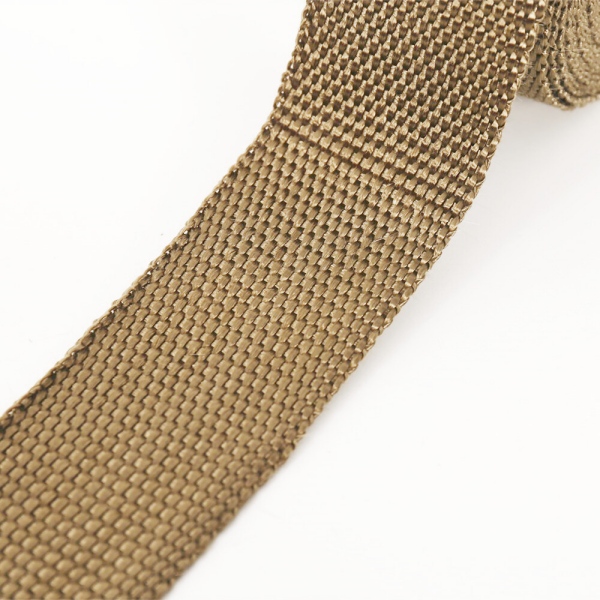
排気管断熱材の主な機能は、熱の遮断です。
むき出しの排気管は、放射と対流によって周囲に熱を伝達します。排気管を布で覆うことで、高温の金属と周囲の部品との間に断熱層が加わります。
適切なラップを選ぶことで、次のような効果が期待できます。
排気管周辺の輻射熱を低減する。
ホース、配線、センサーへの熱の曝露を制限する。
床や隔壁への熱伝達を低減する。
混雑したエンジンルーム内の温度制御を改善する。
作業員が高温の表面に誤って接触するのを防ぐ。
排気システム内に、より多くの熱エネルギーを保持する。
この最後の点が、エキゾーストパイプやターボチャージャーのダウンパイプ周辺に排気熱吸収材が広く使用されている理由です。
しかし、排気管用断熱材は万能の補修材として扱うべきではありません。標準的な断熱材は、ひび割れたパイプの密閉や排気漏れの修理ではなく、熱管理を目的としています。
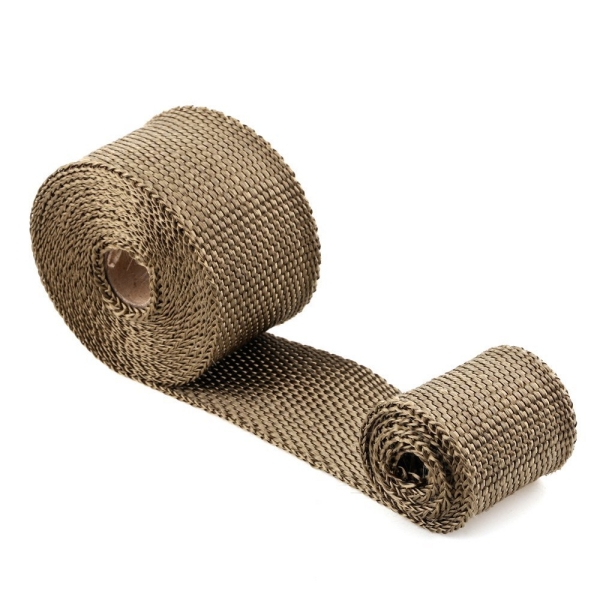
選択する排気管用断熱材色や幅だけで判断するのはよくある間違いです。
完成した設備の性能は、いくつかの要因が相互に作用することによって決まります。
| 選考基準 | なぜそれが重要なのか |
|---|---|
| 排気温度 | 必要な光ファイバーシステムを決定する |
| パイプ径 | 包装幅と必要なロール長さに影響します |
| 排気形状 | 急な曲がりや集電部には、より高い柔軟性が求められる。 |
| 重複 | 断熱材の厚さと材料消費量に影響を与える |
| 湿気への曝露 | 道路、船舶、屋外用途に重要 |
| 油と燃料による汚染 | 長期的な耐用年数に影響を与える可能性があります |
| 振動 | 耐久性と固定方法に影響を与える |
| メンテナンス頻度 | 定期的に取り外す部品には、永久的な包装材は適さない場合があります。 |
そのため、オートバイのエキゾーストパイプに最適な排気管用断熱材が、ターボチャージャーのダウンパイプや工業用ディーゼルエンジンの排気管にも適しているとは限らない。
グラスファイバーは、一般的な排気口の断熱材として最も広く使用されている材料の一つである。
柔軟性があり、経済的で、曲がりやパイプの接続部にぴったりとフィットする細いテープ状に織り込むことができます。グラスファイバーラップは一般的に以下の用途に使用されます。
自然吸気エンジン用自動車用ヘッダー。
オートバイの排気管。
集水管;
一般的な排気管。
中温から高温の工業用配管。
BSTFLEXは、グラスファイバーをベースとした構造をいくつか提供しています。プロブラック排気熱ラップこれは、耐熱ガラス繊維断熱層とステンレス鋼製の外装構造を組み合わせることで、耐摩耗性と耐衝撃性をさらに高めている。
グラスファイバーは、最高耐熱性よりもコスト、柔軟性、実用的な熱制御が重要な用途において、しばしば出発点となる素材です。
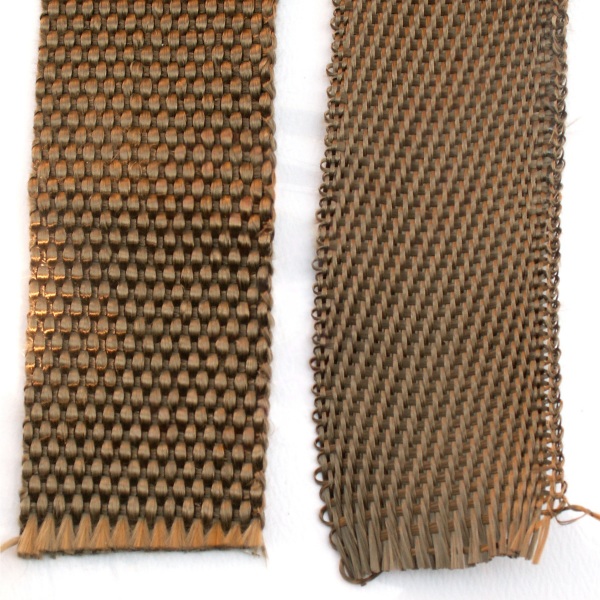
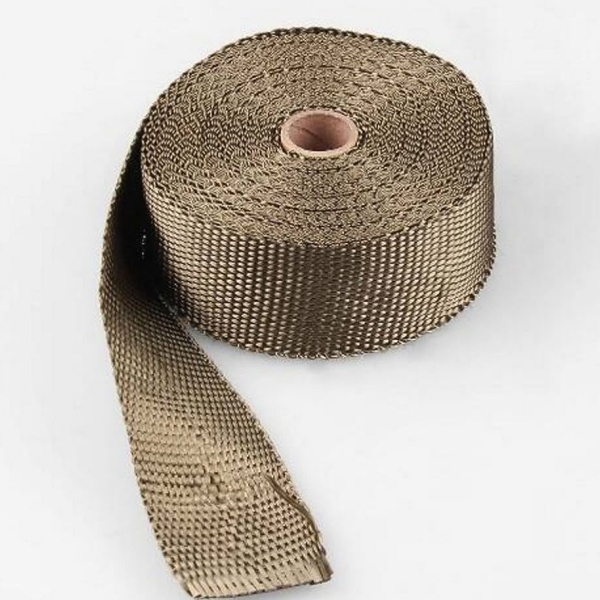
用語チタン製排気ラップ高性能自動車市場では広く使用されているが、通常はラップ材に金属チタンが含まれていることを意味するものではない。
この種の製品は一般的に、玄武岩または火山岩由来の繊維から製造される。
玄武岩繊維は、優れた柔軟性、耐熱性、および繰り返し熱サイクルに対する耐性を備えています。そのため、以下のような用途でよく選ばれています。
パフォーマンスヘッダー;
ターボダウンパイプ;
オートバイ用排気システム
レーシング用排気システム
従来のグラスファイバー用途よりも高温にさらされる設置環境向け。
BSTFLEXブラックチタン製エキゾーストパイプラップ火山岩由来の繊維から製造され、様々な幅とロール長で提供されています。BSTFLEXはこの製品を、1800°Fまでの直接熱にさらされる用途、およびより高い断続的な耐熱性を備えていると認定しています。
玄武岩をベースとした断熱材の実用的な利点は、耐熱性が高いことだけではありません。柔軟性を保ちやすいため、硬質な断熱システムを必要とせずに、ヘッダーや排気管の曲がりにも追従できるという点も大きな利点です。
排気温度が標準的なグラスファイバーの実用的な範囲を超えると、高シリカ繊維の方がより適切な選択肢となる。
シリカ繊維は従来のEガラスよりもシリカ含有量がはるかに高く、継続的な高温暴露がより厳しい用途で使用されます。
BSTFLEXは高温対応インフェルノヘッダー排気ヒートラップテクスチャ加工された非晶質シリカフィラメント糸から作られています。本製品は、最高2000°F(約1093℃)までの使用温度に対応するように設計されています。
代表的な用途としては以下のようなものがあります。
ターボチャージャー付き排気システム。
高出力レーシングエンジン
exhaust manifolds;
high-temperature headers;
industrial exhaust lines;
severe thermal zones where fiberglass may not provide enough temperature margin.
Silica wrap should therefore be considered when the design requirement is driven primarily by temperature rather than cost.
Some exhaust systems require more than simple woven fiber insulation.
Dust generation, surface abrasion, moisture exposure and installation cleanliness may also matter.
For these applications, composite constructions can provide additional properties.
The BSTFLEXSilicone Exhaust Wrap Composite Fiberglass & Silicone Laggingcombines a fiberglass insulation structure with a silicone outer treatment. The coating helps contain loose fibers and creates a more durable, cleaner external surface for applications where an exposed untreated textile is less desirable.
This type of construction can be useful on diesel engines, industrial pipework and equipment where durability and handling characteristics are important alongside thermal insulation.
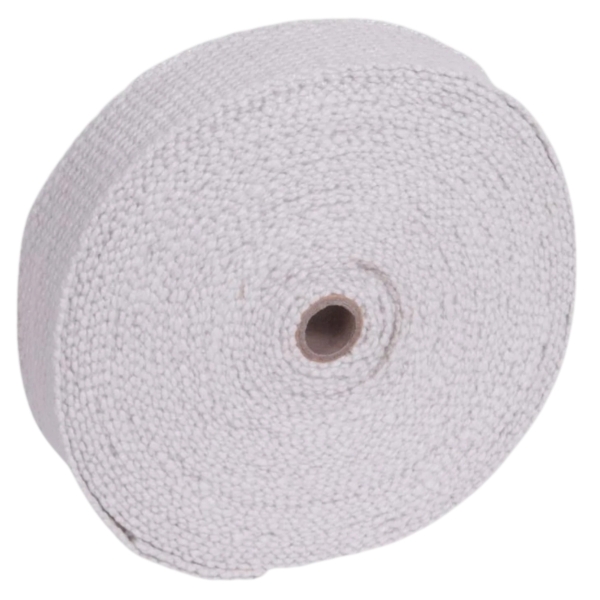
Headers are one of the most common locations forheader wrap.
Individual primary tubes create a large heated surface area, and they often pass close to ignition wiring, brake lines and other heat-sensitive components.
Flexible wrap can follow each primary tube much more easily than a rigid metal shield.
Cast or fabricated exhaust manifolds may also benefit from thermal containment, particularly in compact engine bays.
However, very irregular manifold shapes may be better suited to a removable insulation blanket rather than conventional spiral wrap.
A turbocharger downpipe can be one of the hottest exhaust components outside the turbine housing itself.
Using high-temperatureexhaust heat wraparound a downpipe can reduce radiant heat reaching:
intake piping;
wiring;
brake systems;
bulkheads;
transmission tunnels;
nearby body structures.
For severe turbo applications, basalt or silica materials are generally more relevant than entry-level fiberglass wrap.
Motorcycles expose exhaust headers close to the rider and surrounding bodywork.
For this reason,motorcycle exhaust wrapis used for both thermal management and surface-contact protection.
Fiberglass and basalt-based wraps are commonly selected depending on the temperature and desired appearance.
Diesel engines and generators often operate for long periods under sustained load.
In these systems, exhaust insulation is primarily about:
personnel protection;
nearby equipment protection;
compartment temperature control;
reduction of radiant heat.
Larger industrial systems may use wrap, lagging, removable blankets or combinations of these technologies.
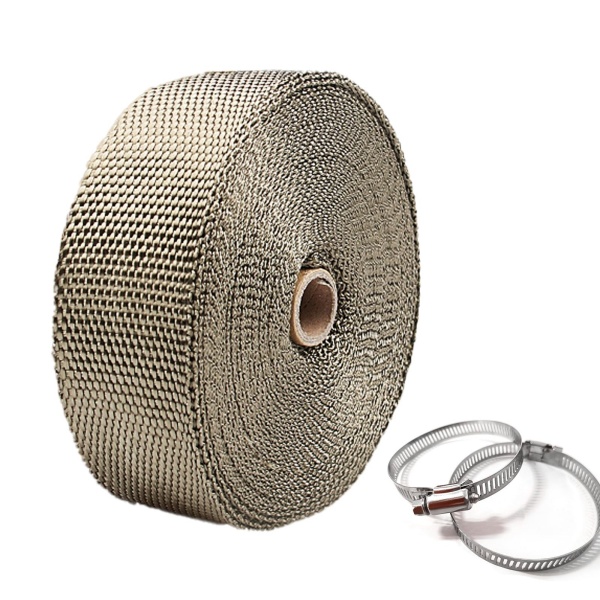
Both products insulate exhaust components, but their construction and installation are different.
Exhaust wrapis installed by winding narrow textile tape around the pipe.
It is best suited to:
headers;
long straight pipe sections;
small-diameter exhaust tubes;
collectors;
downpipes;
motorcycle exhaust systems.
Anexhaust insulation blanketis a preformed textile assembly designed to fit a specific component.
Blankets are more appropriate for:
turbochargers;
large manifolds;
silencers;
large-diameter exhaust pipe;
components that require regular service access.
If the component must be removed frequently, a reusable blanket may be more practical than permanently wrapped tape.
A metal heat shield works differently.
Instead of placing insulation directly against the exhaust pipe, a metal shield normally reflects or blocks radiant heat with an air gap between the hot component and the shield.
This makes metal heat shields useful where:
airflow is available;
the hot component must remain exposed;
service access is important;
direct pipe insulation is not desirable.
Exhaust wrap is generally easier to install around complicated tubing geometry, while a rigid heat shield can be more appropriate when controlling directional radiant heat.
BSTFLEX supplies both textile wraps andexhaust heat shield insulation, allowing the thermal protection method to be matched to the actual installation rather than forcing every system into the same solution.
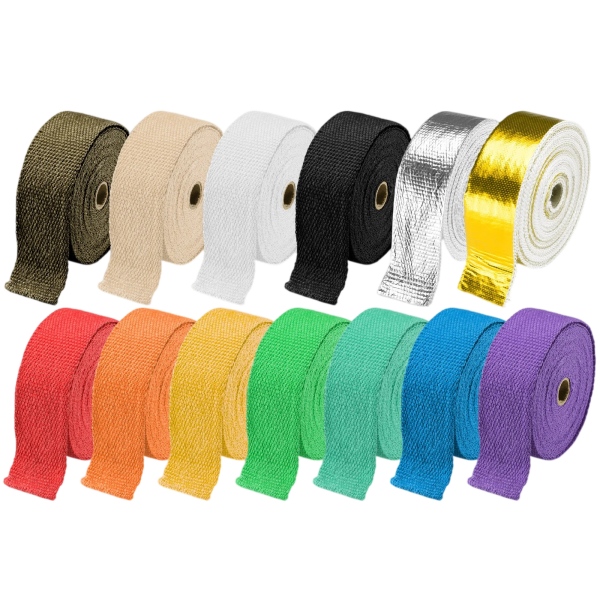
A useful selection process starts with five questions.
Do not select material only from engine horsepower or vehicle type.
Consider both:
continuous operating temperature;
short-duration peak temperature.
A naturally aspirated street engine, turbocharged racing vehicle and industrial diesel generator can have very different thermal requirements.
Stainless steel, mild steel and other exhaust alloys respond differently to repeated heat cycles and moisture exposure.
The pipe condition should also be inspected before wrapping.
Do not cover corrosion, cracks or damaged welds simply to hide them.
A narrow, flexible wrap is useful around:
tight-radius bends;
small motorcycle headers;
complex collectors.
Wider wrap covers straight pipe more quickly but can be harder to position around complicated geometry.
Road vehicles, marine equipment and industrial engines may encounter:
water;
mud;
salt;
oil;
fuel;
dust.
These factors should be considered when choosing both the wrap and any surface treatment.
If the pipe or component needs frequent inspection, a removable jacket or blanket may reduce maintenance time.
BSTFLEX also manufacturesHigh Velocity Jacket Exhaust System Wrap, a jacket-style approach for applications where conventional spiral wrapping is not the preferred installation method.
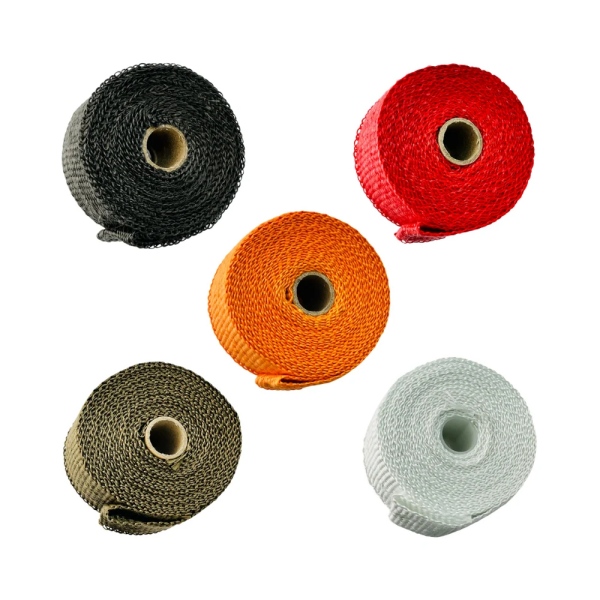
Two widths dominate many automotive installations:
1 inch wrap
Better suited to:
small-diameter tubing;
tight bends;
compact motorcycle headers;
complex collectors.
2 inch wrap
Better suited to:
longer straight exhaust pipes;
larger headers;
downpipes;
applications where faster installation is important.
BSTFLEX also manufactures wider exhaust wrap formats for large-diameter pipes and industrial installations.
The correct width should therefore be selected according to pipe diameter and geometry rather than assuming wider wrap is always better.
Even the correct exhaust wrap can perform poorly if installed incorrectly.
A typical installation involves:
Inspecting and cleaning the exhaust pipe.
Determining the starting point and wrap direction.
Maintaining a consistent overlap.
Working progressively around bends without creating large gaps.
Securing the beginning and end using stainless-steel ties or clamps.
Checking nearby brackets, sensors and moving components.
Re-inspecting the installation after the first thermal cycles.
The exact overlap should follow the product specification and application requirement.
Too little overlap may leave uneven thermal coverage.
Excessive overlap consumes more material and creates unnecessary thickness.
There is no single roll length that fits every exhaust system.
Material consumption depends on:
pipe outside diameter;
total pipe length;
wrap width;
overlap percentage;
number of bends;
collector geometry;
whether multiple layers are required.
For an OEM or production project, the better approach is to calculate material use from an actual drawing, pipe sample or installation specification rather than estimating from vehicle type alone.
BSTFLEX supports custom roll widths and lengths for volume projects where standard retail-sized rolls are inefficient.
Exhaust wrap is effective thermal insulation, but it has limits.
It does not replace:
repair welding;
exhaust leak repair;
damaged flange replacement;
structural pipe repair;
proper heat shielding around extremely sensitive components;
routine inspection of the exhaust system.
It should be treated as part of an engineered thermal management system.
For some installations, the best solution may combine:
exhaust wrap;
removable insulation blankets;
reflective barriers;
metal heat shields;
protective sleeves for nearby wiring and hoses.
| Exhaust Application | Common Material Direction |
|---|---|
| General automotive header | Fiberglass |
| Motorcycle exhaust | Fiberglass or basalt |
| Performance header | Basalt / titanium-style |
| Turbo downpipe | Basalt or silica |
| Extreme-temperature header | Silica |
| Industrial exhaust pipe | Fiberglass, silica or composite |
| Diesel engine exhaust | Fiberglass, silica or silicone composite |
| High-abrasion area | Reinforced or composite construction |
The final choice should always be based on actual temperature, environment and installation design.
For manufacturers and distributors, exhaust wrap specification goes beyond choosing a fiber type.
Production requirements may include:
non-standard widths;
specific roll lengths;
private-label packaging;
custom colors;
material identification;
stainless-steel fixing ties;
application-specific constructions;
sample-based development.
BSTFLEX manufactures exhaust thermal protection products for OEM, distributor and industrial applications and can develop specifications around the exhaust system rather than supplying only fixed retail configurations.
Explore the completeBSTFLEX Exhaust and Header Heat Wrap rangefor fiberglass, basalt, silica, composite and specialty exhaust insulation products.
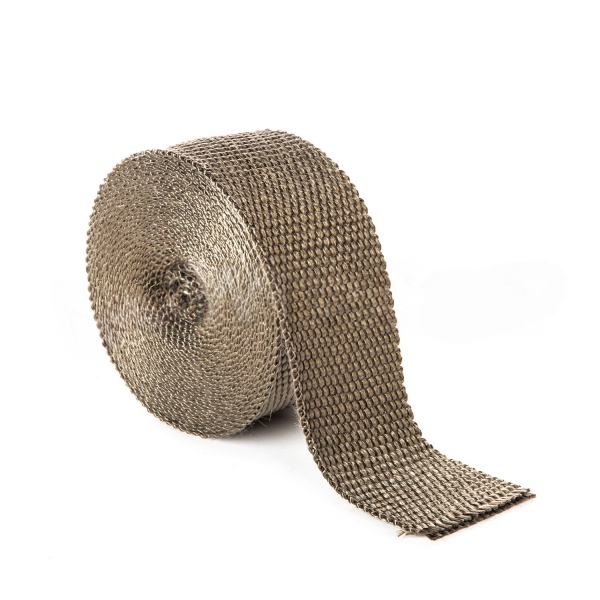
Exhaust wrap is a woven high-temperature insulation tape installed directly around exhaust pipes, headers, manifolds or downpipes to reduce radiant heat and improve thermal containment.
In most automotive and industrial applications, the terms refer to the same general product family. “Exhaust heat wrap” emphasizes its thermal insulation function, while “exhaust wrap” is the broader commercial term.
最適な素材は一つだけではありません。グラスファイバーは多くの一般的な用途に適しており、玄武岩は高性能システムでよく選ばれ、高シリカラップはより厳しい温度環境に適しています。
はい。ダウンパイプは、高温対応の排気管断熱材の一般的な用途です。材質は、実際の連続排気温度と最高排気温度に基づいて選定する必要があります。
通常はそうではありません。チタン製排気管保護材として販売されている製品は、金属チタンではなく、玄武岩や火山岩由来の繊維で作られているのが一般的です。
いいえ。標準的な排気管用断熱材は、熱管理を目的としており、構造的な配管や漏水補修を目的としたものではありません。
細い巻き線は一般的に小径のパイプや急な曲がり角に取り付けやすく、一方、幅の広い巻き線は太いパイプや直線的な排気管に素早く取り付けられます。

No.10, Chuangxin North Road, Nanshan Park, Ningguo Economic and Technological Development Zone, Ningguo City, Anhui Province, China
tel/Whatsapp : 0086-15856303740
Eメール : sales@bstbraidedsleeve.com
Skype : vanesa-cheng